File list
This special page shows all uploaded files.
| Date | Name | Thumbnail | Size | User | Description | Versions |
|---|---|---|---|---|---|---|
| 10:44, 21 March 2019 | GreenTank.mp4 (file) | 2.15 MB | Jhurley | Dye tank simulation of matrix diffusion. | 1 | |
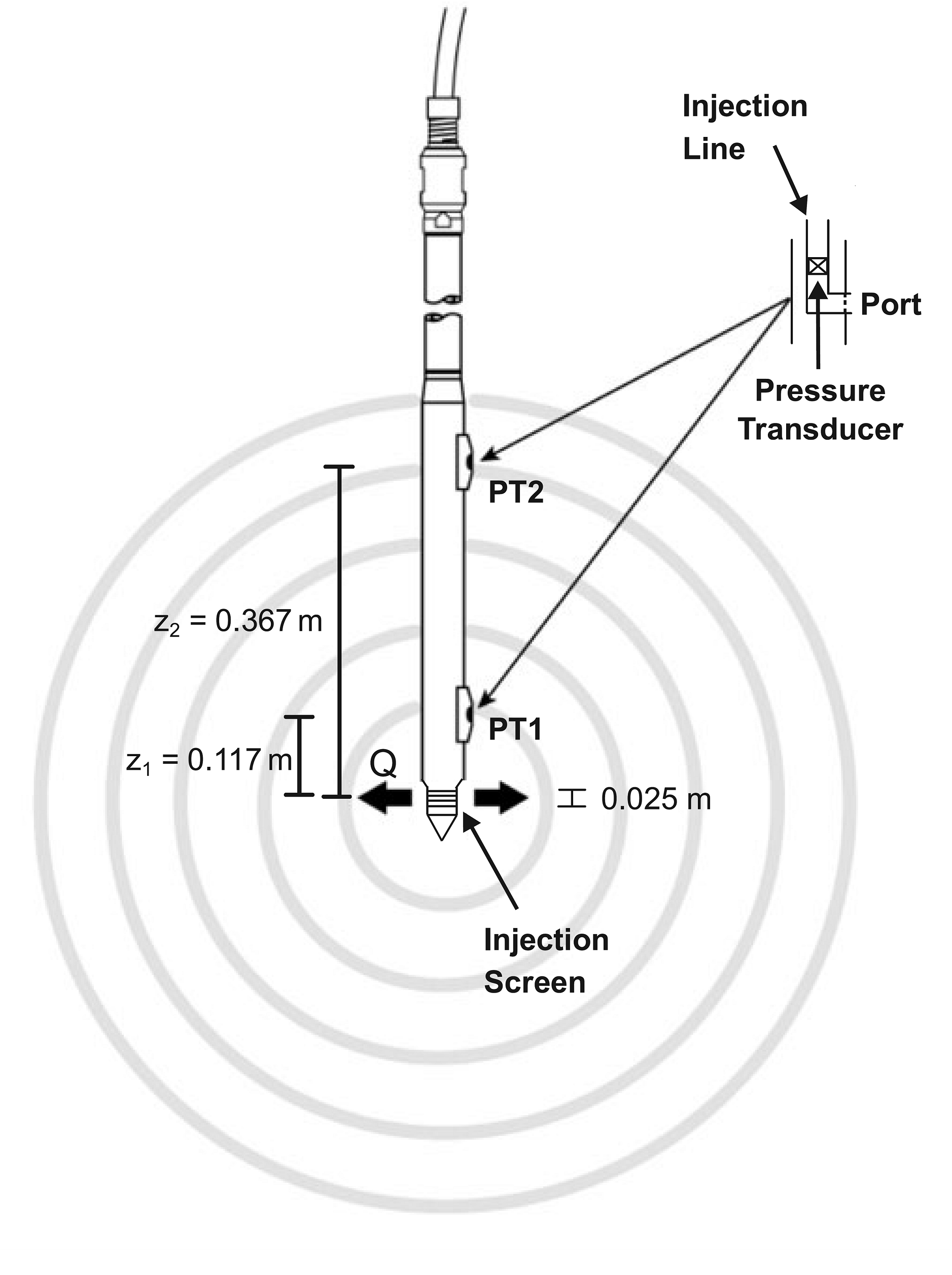
| 10:44, 2 April 2019 | Liu1w2 Fig7A 2.png (file) |  |
698 KB | Debra Tabron | Figure 7A. Schematic of the DPP (not to scale). | 1 |
| 11:51, 4 April 2019 | 2012b-USEPA-An Approach for Dev. Site-Specific Lateral and Vertical Inclusion Zones....pdf (file) |  |
2.87 MB | Debra Tabron | U.S. Environmental Protection Agency (USEPA), 2012. An Approach for developing site-specific lateral and vertical inclusion zones within which structures should be evaluated for petroleum vapor intrusion due to releases of motor fuel from underground s... | 1 |
| 13:53, 4 April 2019 | 2013-USEPA-Evaluation of Empirical Data to Support soil Vapor intrusion Screening Criteria.pdf (file) | |
2.71 MB | Debra Tabron | U.S. Environmental Protection Agency (USEPA), 2013. Evaluation of Empirical Data to Support Soil Vapor Intrusion Screening Criteria for Petroleum Hydrocarbon Compounds. Office of Underground Storage Tanks, Washington, D.C. EPA 510-R-13-001. Report pdf. | 1 |
| 14:02, 4 April 2019 | 2009-Davis- Bioattenuation of Petroleum Hydrocarbon Vapors in the Subsurface.pdf (file) | |
789 KB | Debra Tabron | Davis, R.V. 2009. Bioattenuation of Petroleum Hydrocarbon Vapors in the Subsurface: Update on Recent Studies and Proposed Screening Criteria for the Vapor‐Intrusion Pathway. LUSTLine Bulletin 61:11‐14. New England Interstate Water Pollution Control... | 1 |
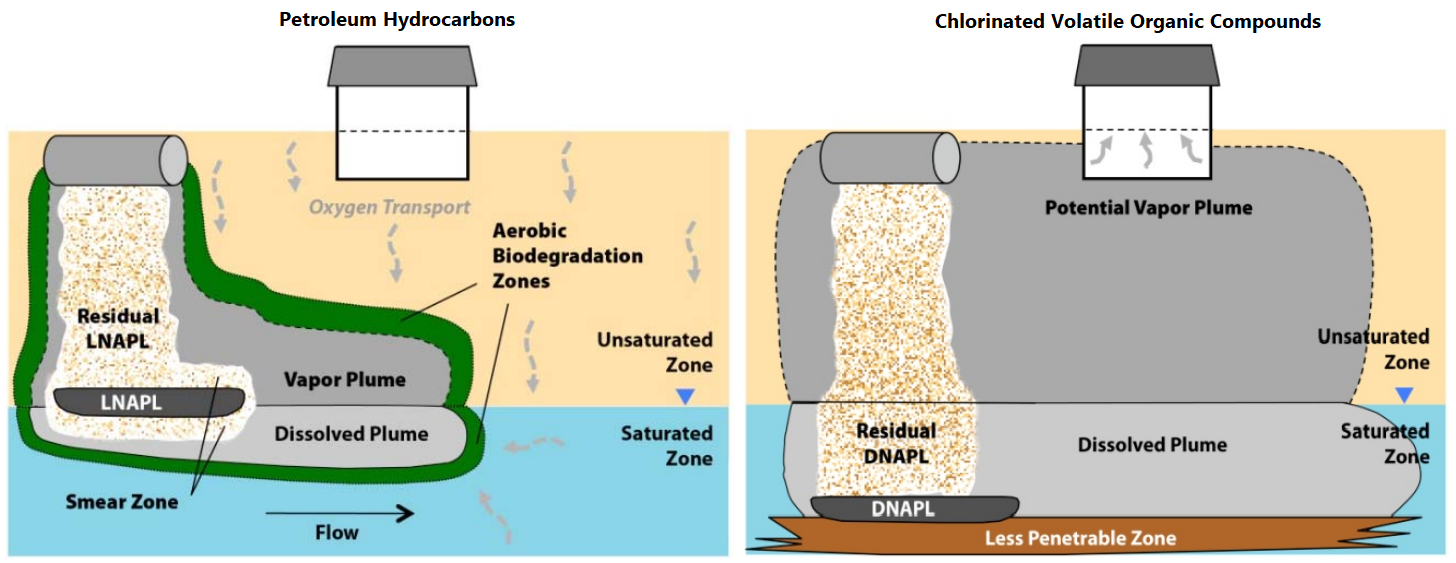
| 09:31, 5 April 2019 | Weaver1w2fig1.png (file) |  |
598 KB | Debra Tabron | Figure 1 Typical conceptual models for vapor intrusion from a release of petroleum hydrocarbons (such as a fuel spill) and for a release of chlorinated volatile organic compounds | 1 |
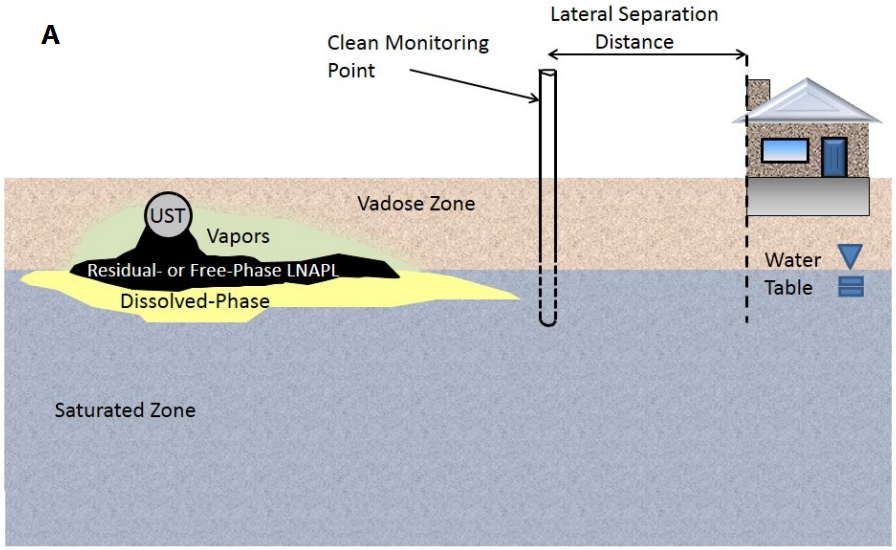
| 09:37, 5 April 2019 | Weaver1w2fig2a.png (file) |  |
479 KB | Debra Tabron | Figure 2, Panel A: Lateral separation distance from petroleum contamination. | 1 |
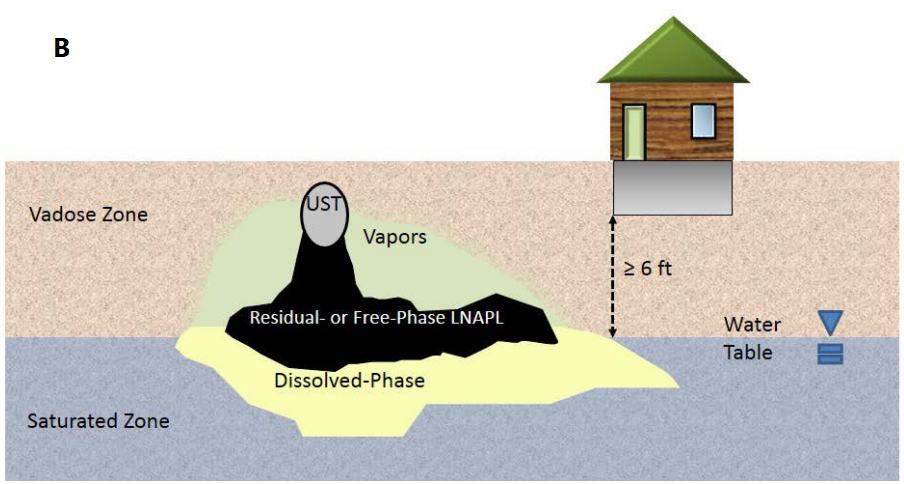
| 09:38, 5 April 2019 | Weaver1w2fig2b.png (file) |  |
426 KB | Debra Tabron | Figure 2, Panel B: Vertical separation distance from aqueous phase petroleum contamination. | 1 |
| 09:40, 5 April 2019 | Weaver1w2fig2c.png (file) |  |
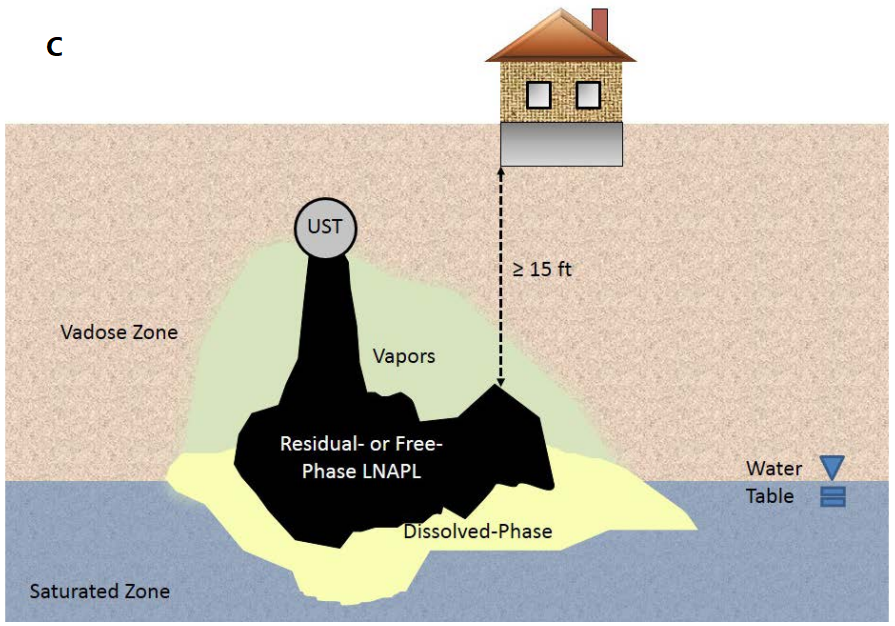
584 KB | Debra Tabron | Figure 2, Panel C: Vertical separation distance from LNAPL petroleum contamination. | 1 |
| 10:18, 16 April 2019 | 2018-USEPA. Remedial Technology Fact Sheet.pdf (file) | |
915 KB | Debra Tabron | USEPA, 2018. Remedial Technology Fact Sheet — Activated Carbon-Based Technology for In Situ Remediation. EPA 542-f-18-001 | 1 |
| 11:49, 25 April 2019 | 2007-NIOSH Pocket Guide to Chemical Hazards.pdf (file) | |
6.05 MB | Debra Tabron | NIOSH, 2007. NIOSH Pocket Guide to Chemical Hazards. US Department of Health and Human Services, DHHS (NIOSH) Publication Number 2005-149. | 1 |
| 11:51, 25 April 2019 | 2017-USEPA- Technical Fact Sheet.pdf (file) | |
126 KB | Debra Tabron | US EPA, 2017. Technical Fact Sheet – 1,4-Dioxane. Publication number: EPA 505-F-17-001 | 1 |
| 16:11, 25 April 2019 | 1994-Parales-Degradation of 1,4-Dioxane by an Actinomycete in Pure Culture.pdf (file) | |
829 KB | Debra Tabron | Parales, R.E., J.E. Adamus, N. White, and H.D. May, 1994. Dedegradation of 1,4-dioxane by an Actinomycete in pure culture. Applied and Environmental Microbiology, 60(12), 4527-4530. | 1 |
| 17:11, 25 April 2019 | 2016-Knappe-Occurrence of 1,4-dioxane in the Cape Fear River.pdf (file) | |
3.43 MB | Debra Tabron | Knappe, D.R.U., C. Lopez-Velandia, Z. Hopkins, and M. Sun, 2016. Occurrence of 1,4-dioxane in the Cape Fear River watershed and effectiveness of water treatment options for 1,4-dioxane control. Water Resources Research Institute of The University of No... | 1 |
| 15:17, 26 April 2019 | 2012-ASTDR. Toxicological profile for 1,4-dioxane.pdf (file) | |
6.82 MB | Debra Tabron | ATSDR, 2012. Toxicological profile for 1,4-dioxane. Agency for Toxic Substances and Disease Registry | 1 |
| 16:05, 26 April 2019 | 2018-USEPA-Edition of the Drinking Water Standards and Health Advisories.pdf (file) | |
777 KB | Debra Tabron | US EPA, 2018(a). 2018 Edition of the Drinking Water Standards and Health Advisories. US Environmental Protection Agency, Publication number: EPA 822-F-18-001. | 1 |
| 16:48, 26 April 2019 | 2001-Black-Occurrence of 1,4-dioxane in cosmetic raw materials....pdf (file) | |
48 KB | Debra Tabron | Black, R.E., F.J. Hurley, and D.C. Havery, 2001. Occurrence of 1,4-dioxane in cosmetic raw materials and finished cosmetic products. Journal of the Association of Official Agricultural Chemists International, 84(3), 666-670 | 1 |
| 16:56, 26 April 2019 | 2012-Ortega-Sulfonation sulfation.pdf (file) | |
1.88 MB | Debra Tabron | Ortega, J.A.T., 2012. Sulfonation/sulfation processing technology for anionic surfactant manufacture. Advances in Chemical Engineering. | 1 |
| 17:02, 26 April 2019 | 1997-Sachdeva-Apparatus for decontaminating a liquid surfractant.pdf (file) | |
1.1 MB | Debra Tabron | achdeva, Y. and R. Gabriel, 1997. Apparatus for decontaminating a liquid surfractant of dioxane, United States: Pharm-Eco Laboratories Inc. | 1 |
| 17:08, 26 April 2019 | 1998-Ellis-Destroying 1,4-dioxane in byproduct streams formed during polyester.pdf (file) | |
606 KB | Debra Tabron | Ellis, R.A. and J.S. Thomas, 1998. Destroying 1,4-dioxane in byproduct streams formed during polyester synthesis. United States Patent Office: Wellman Inc. | 1 |
| 15:49, 30 April 2019 | 2000-Keel-Downtown Bellingham Air Toxics Screening Project.pdf (file) | |
520 KB | Debra Tabron | Keel, L. and A. Franzmann, 2000. Downtown Bellingham air toxics screening project, 1995-1999 staff report. Northwest Air Pollution Authority (NWAPA) | 1 |
| 10:57, 1 May 2019 | 1997-Fleming-Laboratory assessment of advanced oxidation process.pdf (file) | |
2.81 MB | Debra Tabron | Fleming, E.C., M.E. Zappi, E. Toro, R. Hernandez, and K. Myters, 1997. Laboratory assessment of advanced oxidation processes for treatment of explosives and chlorinated solvents in groundwater from the former Nebraska ordnance plant. Technical Report S... | 1 |
| 16:17, 1 May 2019 | 2007-Bowman-System and method fo remediating contaminated soil and groundwater.pdf (file) | |
1.2 MB | Debra Tabron | Bowman, R.H., Lahey, T. and Herlihy, P. System and method for remediating contaminated soil and groundwater in situ, Applied Process Tech Inc, 2007. U.S. Patent 7,264,419. | 1 |
| 16:58, 1 May 2019 | 2012-Shangraw-Full-scale Treatment of 1,4-dioxane.pdf (file) | |
3.47 MB | Debra Tabron | Shangraw, T. and W. Plaehn, 2012. Full-scale treatment of 1,4-dioxane using a bioreactor. Federal Remediation Technologies Roundtable Meetin | 1 |
| 12:39, 2 May 2019 | 2018-Evans-ER-201324 Cost & Performance Report.pdf (file) | |
2.02 MB | Debra Tabron | Evans, P., D.J. Hooper, M. Lamar, D. Nguyen, P. Dugan, M. Crimi, and N. Ruiz, 2018. Sustained in situ chemical oxidation (ISCO) of 1,4-dioxane and chlorinated VOCs using slow-release chemical oxidant cylinder. ESTCP Cost and Performance Report, ER-201324 | 1 |
| 14:07, 2 May 2019 | 2017-Hinchee-1.4 Dioxane remediation by extreme soil XSVE ER-201326 Final Report.pdf (file) | |
11.28 MB | Debra Tabron | Hinchee, R.E., P.C. Johnson, P.R. Dahlen, and D.R. Durris, 2017. 1,4-Dioxane remediation by extreme soil vapor extraction (XSVE). Final Report ESTCP Project 201326. | 1 |
| 17:15, 6 May 2019 | 1996-Turco and Huss Rehabilitation of TCE.pdf (file) | |
435 KB | Debra Tabron | Turco, M.A. and Huss, E.E., 1996. Rehabilitation of TCE-contaminated Underground Storm Water System using Trenchless Technology. Brown and Root Environmental, Wayne PA. | 1 |
| 17:16, 6 May 2019 | 2010-Riis-Migratioin pathways of Chlorinated Solvents.pdf (file) | |
2.1 MB | Debra Tabron | Riis, C.E.; Christensen, A.G.; Hansen, M.H.; Husum, H.; Terkelsen, M., 2010. Vapor intrusion through sewer systems: Migration pathways of chlorinated solvents from groundwater to indoor air. In: Seventh Battelle International Conference on Remediation... | 1 |
| 17:18, 6 May 2019 | 2014-Chemical Hazards and Poisons Rpt.pdf (file) | |
6.08 MB | Debra Tabron | Macklin, Y.; Welfare, W.; Kowalczyk, G.; Mitchem, L.; Modi, A.; Craswell, A.; Brown, M.; Lighton, L., 2014. Sewers, culverts and other underground pipes–an under recognised pathway for chemical exposures in acute incidents: case series. Chemical Haza... | 1 |
| 17:21, 6 May 2019 | 2017b-McHugh-Recent advances in vapor intrusion.pdf (file) | |
1.14 MB | Debra Tabron | McHugh, T.; Loll, P.; Eklund, B., 2017(b). Recent advances in vapor intrusion site investigations. Journal of Environmental Management 204: 783-792. | 1 |
| 17:23, 6 May 2019 | 2017-ERM-Vapor Intrusion Eval Activities Summary.pdf (file) | |
2.62 MB | Debra Tabron | ERM, 2017. Vapor Intrusion Evaluation Activities Summary Report - February to December 2016, Indianapolis, Indiana. | 1 |
| 17:24, 6 May 2019 | 2018a-McHugh-ER-201505 Investigation Protocol.pdf (file) | |
1.73 MB | Debra Tabron | McHugh, T.; Beckley, L, 2018(a). Investigation Protocol: Sewers and Utility Tunnels as Preferential Pathways for Volatile Organic Compound Migration into Buildings: Risk Factors and Investigation Protocol, ESTCP Project ER-201505. | 1 |
| 17:26, 6 May 2019 | 2018b-McHugh-ER-201505 Conceptual Model.pdf (file) | |
1.17 MB | Debra Tabron | McHugh, T.; Beckley, L, 2018(b). Conceptual Model: Sewers and Utility Tunnels as Preferential Pathways for Volatile Organic Compound Migration into Buildings: Risk Factors and Investigation Protocol, ESTCP Project ER-201505. | 1 |
| 17:27, 6 May 2019 | 2018-Holton-A Review of Pref Path Case Studies.pdf (file) | |
3.45 MB | Debra Tabron | Holton, C.; Simms, J., 2018. A Review of Preferential Pathway Case Studies: Lessons Learned for Vapor Intrusion Site Assessment. Midwestern States Environmental Consultants Association Spring Seminar, Indianapolis, Indiana | 1 |
| 17:28, 6 May 2019 | 2018-Viteri Rapid Real-time TCE Measurements.pdf (file) | |
4.14 MB | Debra Tabron | Viteri, C. R.; Richman, B.; Vitouchkine, A.; Armen, M. A.; Miller, A., 2018. Rapid, Real-time TCE Measurements of Sewer Headspace: Characterizing Spatial and Temporal Variability. AEHS 28th Annual International Conference on Soil, Water, Energy, and A... | 1 |
| 16:40, 7 May 2019 | Beckley1w2 Fig1a.png (file) |  |
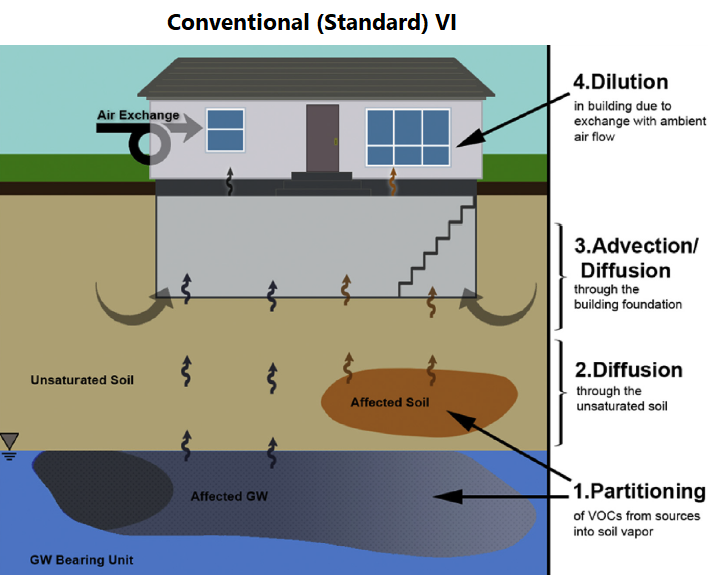
231 KB | Debra Tabron | Figure 1a. Conventional (Standard) Vapor Intrusion. Figure 1b. Sewer/Utility Tunnel Vapor Intrusion. (from McHugh et al., 2017b) | 1 |
| 16:41, 7 May 2019 | Beckley1w2 Fig1b.png (file) |  |
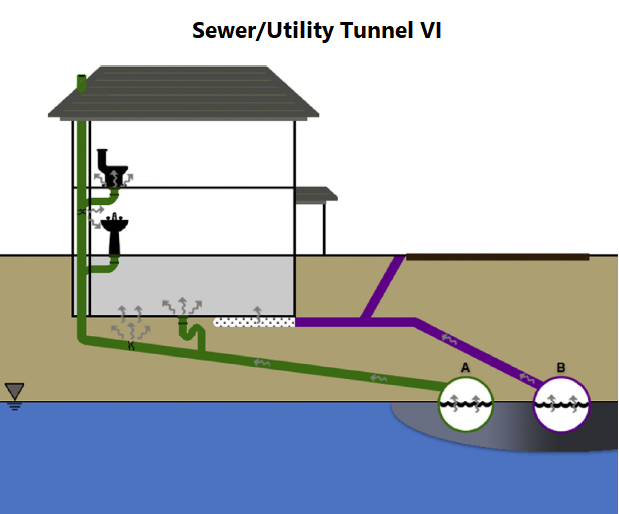
99 KB | Debra Tabron | Figure 1b. Sewer/Utility Tunnel Vapor Intrusion. McHugh et al., 2017b | 1 |
| 16:43, 7 May 2019 | Beckley1w2 Fig2a.png (file) |  |
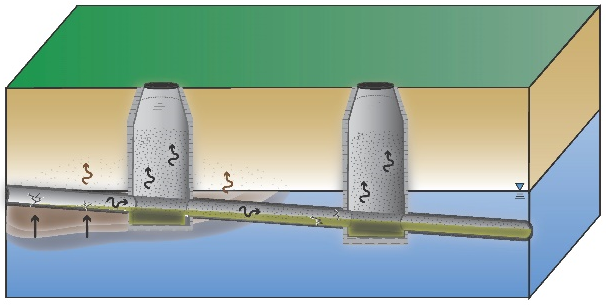
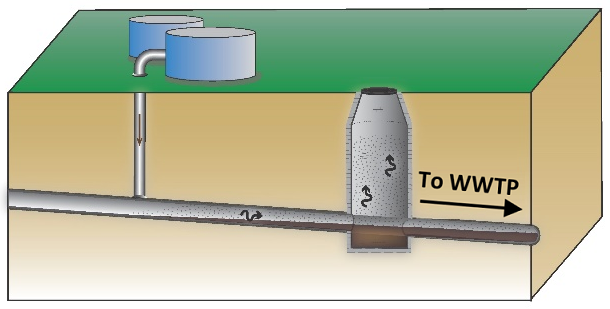
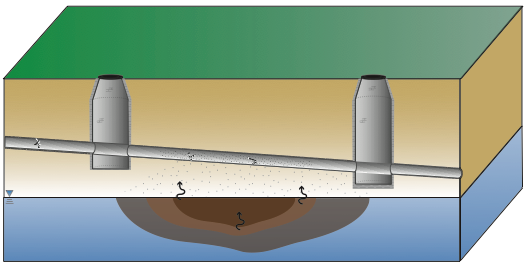
135 KB | Debra Tabron | Figure 2a. Sewer Intersects Contaminated Groundwater | 1 |
| 16:44, 7 May 2019 | Beckley1w2 Fig2b.png (file) |  |
111 KB | Debra Tabron | Figure 2b. Discharge of Groundwater to Sewer Line | 1 |
| 16:45, 7 May 2019 | Beckley1w2 Fig2c.png (file) |  |
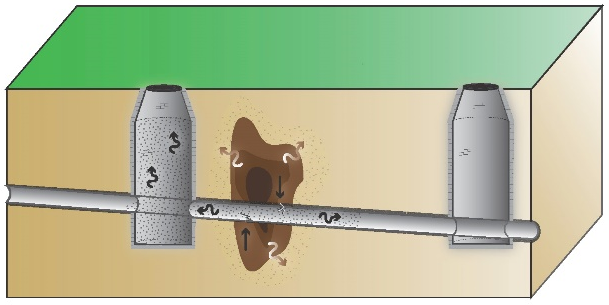
138 KB | Debra Tabron | Figure 2c. Sewer Intersects NAPL/Vadose Zone Source | 1 |
| 16:46, 7 May 2019 | Beckley1w2 Fig2d.png (file) |  |
90 KB | Debra Tabron | Figure 2d. Sewer in Vadose Zone above Plume | 1 |
| 16:47, 7 May 2019 | Beckley1w2 Fig2 legend.png (file) |  |
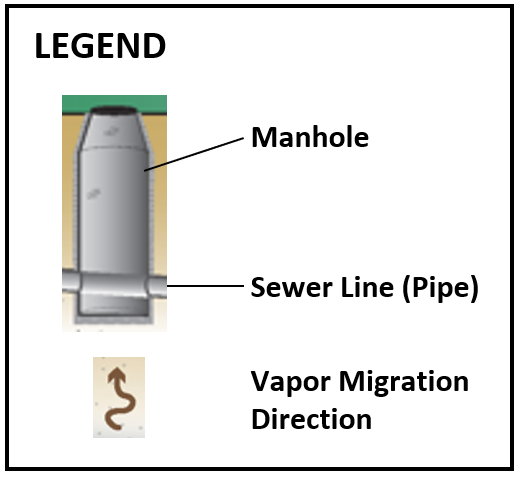
61 KB | Debra Tabron | 1 | |
| 16:51, 7 May 2019 | Beckley1w2 Fig3.png (file) |  |
73 KB | Debra Tabron | Figure 3 . Vapor Sample Collection from Sewer | 1 |
| 16:52, 7 May 2019 | Beckley1w2 Fig4.png (file) |  |
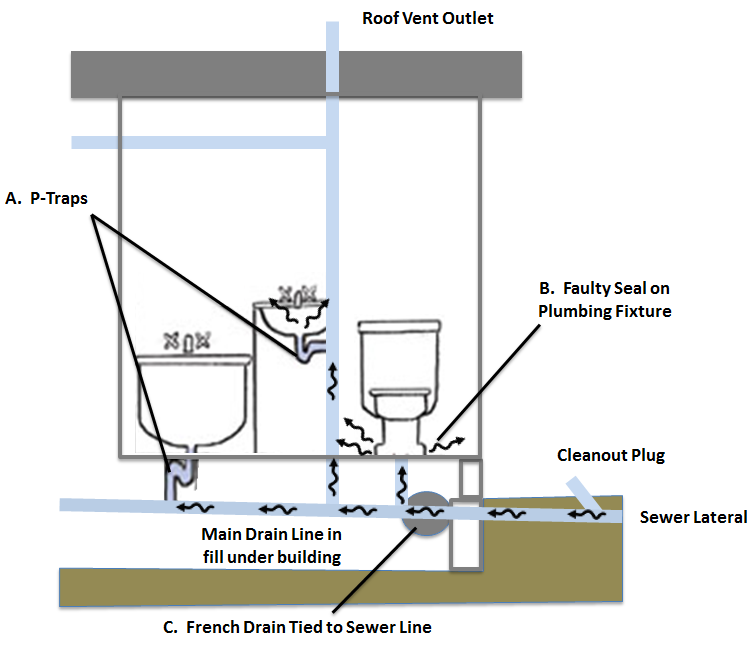
101 KB | Debra Tabron | Figure 4. Potential Entry Points into Buildings. VOCs can move from sewers and utility tunnels into buildings through a variety of features, for example: A. Dry p-traps; B. Faulty seal on plumbing fixture (e.g., Pennell et al. 2013); and C. French dr... | 1 |
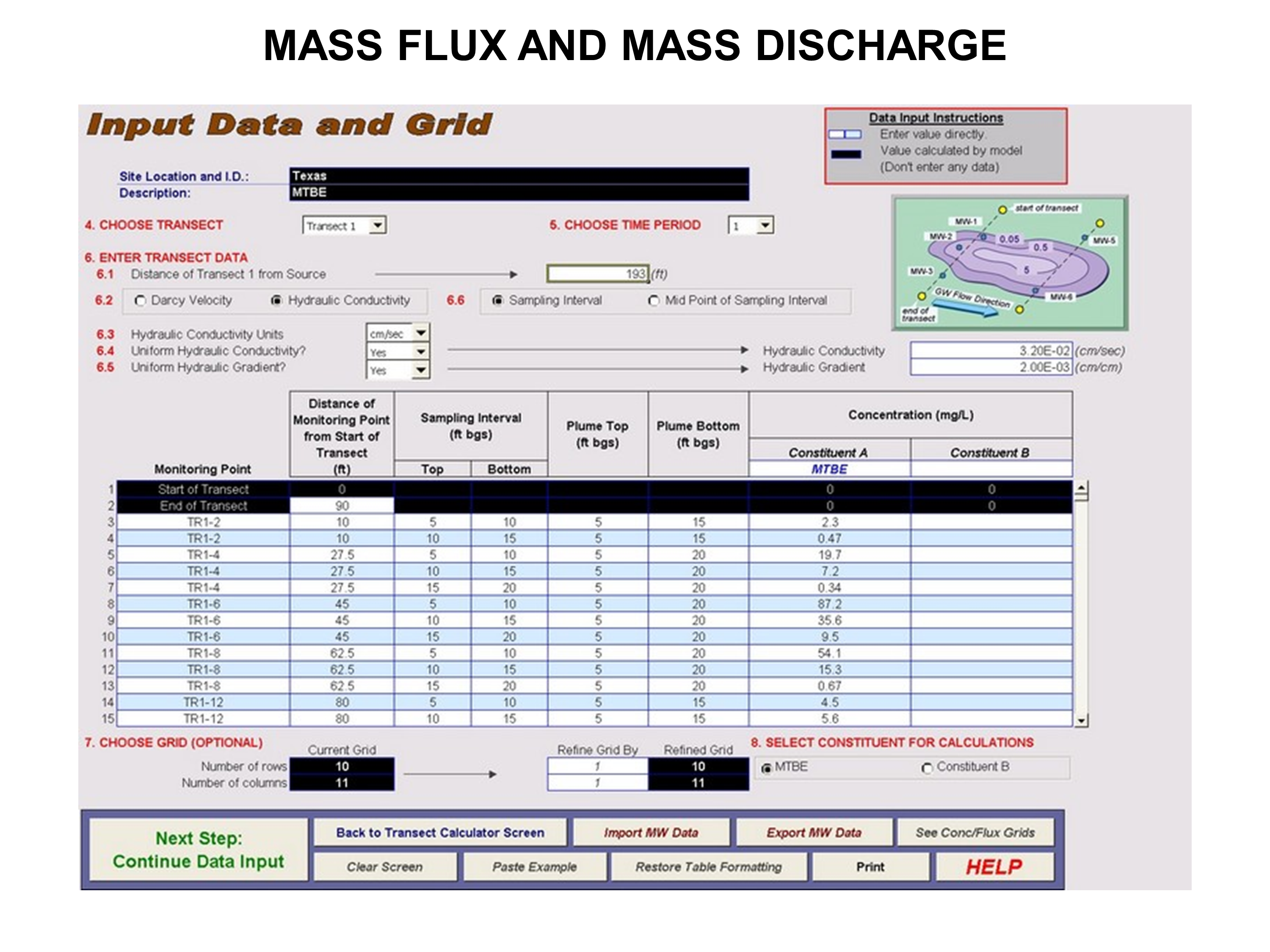
| 11:21, 10 May 2019 | MassFluxToolkit WithVoice.mp4 (file) | 29.65 MB | Admin | Mass Flux Toolkit | 1 | |
| 09:23, 13 May 2019 | WH Picture16.PNG (file) |  |
4.62 MB | Admin | 1 | |
| 09:32, 13 May 2019 | WH Picture17.PNG (file) |  |
5.99 MB | Admin | 1 | |
| 09:32, 13 May 2019 | WH Picture18.PNG (file) |  |
2.2 MB | Admin | 1 | |
| 09:32, 13 May 2019 | WH Picture19.PNG (file) |  |
8.46 MB | Admin | 1 | |
| 09:34, 13 May 2019 | WH Picture20.PNG (file) |  |
4.45 MB | Admin | 1 |