|
|
| Line 1: |
Line 1: |
| − | ==Passive Sampling of Sediments== | + | ==PFAS Leaching Characterization with the Leaching Environmental Assessment Framework (LEAF)== |
| − | "Passive sampling" refers to a group of methods used to quantify the availability of organic contaminants to move between different media and/or to react in environmental systems such as indoor air, lake waters, or contaminated sediment beds. To do this, the passive sampling material is deployed in the environmental system and allowed to absorb chemicals of interest via diffusive transfers from the surroundings. Upon recovery of the passive sampler, the accumulated contaminants are measured, and the concentrations in the sampler are interpreted to infer the chemical concentrations in specific surrounding media like porewater in a sediment bed. Such data are then useful inputs for site assessments such as those seeking to quantify fluxes from contaminated sediment beds to overlying waters or to evaluate the risk of significant uptake into benthic infauna and the larger food web.
| + | [[Wikipedia: Firefighting_foam#Synthetic_foams | Aqueous film-forming foams (AFFFs)]] are a major source of [[Perfluoroalkyl and Polyfluoroalkyl Substances (PFAS) | per- and poly-fluoroalkyl substances (PFAS)]] impacts in soil and groundwater. Standardized tools are needed to rapidly assess the potential for retention, leaching, and transport of PFAS from the source zone to downgradient regions, so that this information can be applied towards critical facets of site management such as prioritizing PFAS-impacted sites for further investigation and remediation. Existing standard leaching methods were developed prior to concerns regarding PFAS. Therefore, studies are needed to ensure that leaching methods are compatible for use with PFAS and that resulting data are representative of the risk of PFAS leaching at impacted sites. |
| | <div style="float:right;margin:0 0 2em 2em;">__TOC__</div> | | <div style="float:right;margin:0 0 2em 2em;">__TOC__</div> |
| | | | |
| | '''Related Article(s):''' | | '''Related Article(s):''' |
| − | * [[Contaminated Sediments - Introduction]]
| |
| − | * [[In Situ Treatment of Contaminated Sediments with Activated Carbon]]
| |
| − | * [[Passive Sampling of Munitions Constituents]]
| |
| | | | |
| − | '''Contributor(s):''' [[Dr. Philip M. Gschwend]]
| + | *[[Perfluoroalkyl and Polyfluoroalkyl Substances (PFAS)]] |
| | + | *[[PFAS Sources]] |
| | + | *[[PFAS Transport and Fate]] |
| | | | |
| − | '''Key Resource(s):''' | + | '''Contributors:''' Dr. Jennifer L. Guelfo, Dr. David Kosson, Dr. Andy Garrabrants, Ms. Fangfei Liu, Mr. Darlington Yawson, Dr. Md. Isreq Real |
| − | * Validating the Use of Performance Reference Compounds in Passive Samplers to Assess Porewater Concentrations in Sediment Beds<ref name ="Apell2014">Apell, J.N. and Gschwend, P.M., 2014. Validating the Use of Performance Reference Compounds in Passive Samplers to Assess Porewater Concentrations in Sediment Beds. Environmental Science and Technology, 48(17), pp. 10301-10307. [https://doi.org/10.1021/es502694g DOI: 10.1021/es502694g]</ref>
| |
| | | | |
| − | * ''In situ'' passive sampling of sediments in the Lower Duwamish Waterway Superfund site: Replicability, comparison with ''ex situ'' measurements, and use of data<ref name="Apell2016">Apell, J.N., and Gschwend, P.M., 2016. ''In situ'' passive sampling of sediments in the Lower Duwamish Waterway Superfund site: Replicability, comparison with ''ex situ'' measurements, and use of data. Environmental Pollution, 218, pp. 95-101. [https://doi.org/10.1016/j.envpol.2016.08.023 DOI: 10.1016/j.envpol.2016.08.023] [[Media: ApellGschwend2016.pdf | Authors’ Manuscript]]</ref>
| + | '''Key Resources:''' |
| | + | *Development of Leaching Tests for Materials Containing SVOCs and PFAS, EPA 600/R-23/382<ref name="GarrabrantsEtAl2024"/> |
| | | | |
| − | * Laboratory, Field, and Analytical Procedures for Using Passive Sampling in the Evaluation of Contaminated Sediments: User’s Manual<ref name="Burgess2017">Burgess, R.M., Kane Driscoll, S.B., Burton, A., Gschwend, P.M., Ghosh, U., Reible, D., Ahn, S., and Thompson, T., 2017. Laboratory, Field, and Analytical Procedures for Using Passive Sampling in the Evaluation of Contaminated Sediments: User’s Manual, EPA/600/R-16/357. SERDP/ESTCP and U.S. EPA, Office of Research and Development, Washington, DC 20460. [https://cfpub.epa.gov/si/si_public_record_report.cfm?Lab=NHEERL&dirEntryID=308731 Website] [[Media: EPA600R16357.pdf | Report.pdf]]</ref> | + | *[https://www.epa.gov/hw-sw846/leaching-environmental-assessment-framework-leaf-methods-and-guidance Leaching Environmental Assessment Framework (LEAF) Methods and Guidance] (EPA website) |
| | | | |
| − | ==Introduction== | + | ==Introduction to LEAF== |
| − | Environmental media such as sediments typically contain many different materials or phases, including liquid solutions (e.g. water, [[Light Non-Aqueous Phase Liquids (LNAPLs)| nonaqueous phase liquids]]like spilled oils) and diverse solids (e.g., quartz, aluminosilicate clays, and combustion-derived soots). Further, the chemical concentration in the porewater medium includes both molecules that are "truly dissolved" in the water and others that are associated with colloids in the porewater<ref name="Brownawell1986">Brownawell, B.J., and Farrington, J.W., 1986. Biogeochemistry of PCBs in interstitial waters of a coastal marine sediment. Geochimica et Cosmochimica Acta, 50(1), pp. 157-169. [https://doi.org/10.1016/0016-7037(86)90061-X DOI: 10.1016/0016-7037(86)90061-X] Free download available from: [https://semspub.epa.gov/work/01/268631.pdf US EPA].</ref><ref name="Chin1992">Chin, Y.P., and Gschwend, P.M., 1992. Partitioning of Polycyclic Aromatic Hydrocarbons to Marine Porewater Organic Colloids. Environmental Science and Technology, 26(8), pp. 1621-1626. [https://doi.org/10.1021/es00032a020 DOI: 10.1021/es00032a020]</ref><ref name="Achman1996">Achman, D.R., Brownawell, B.J., and Zhang, L., 1996. Exchange of Polychlorinated Biphenyls Between Sediment and Water in the Hudson River Estuary. Estuaries, 19(4), pp. 950-965. [https://doi.org/10.2307/1352310 DOI: 10.2307/1352310] Free download available from: [https://www.academia.edu/download/55010335/135231020171114-2212-b93vic.pdf Academia.edu]</ref>. As a result, contaminant chemicals distribute among these diverse media (Figure 1) according to their affinity for each and the amount of each phase in the system<ref name="Gustafsson1996">Gustafsson, Ö., Haghseta, F., Chan, C., MacFarlane, J., and Gschwend, P.M., 1996. Quantification of the Dilute Sedimentary Soot Phase: Implications for PAH Speciation and Bioavailability. Environmental Science and Technology, 31(1), pp. 203-209. [https://doi.org/10.1021/es960317s DOI: 10.1021/es960317s]</ref><ref name="Luthy1997">Luthy, R.G., Aiken, G.R., Brusseau, M.L., Cunningham, S.D., Gschwend, P.M., Pignatello, J.J., Reinhard, M., Traina, S.J., Weber, W.J., and Westall, J.C., 1997. Sequestration of Hydrophobic Organic Contaminants by Geosorbents. Environmental Science and Technology, 31(12), pp. 3341-3347. [https://doi.org/10.1021/es970512m DOI: 10.1021/es970512m]</ref><ref name="Lohmann2005">Lohmann, R., MacFarlane, J.K., and Gschwend, P.M., 2005. Importance of Black Carbon to Sorption of Native PAHs, PCBs, and PCDDs in Boston and New York Harbor Sediments. Environmental Science and Technology, 39(1), pp.141-148. [https://doi.org/10.1021/es049424+ DOI: 10.1021/es049424+]</ref><ref name="Cornelissen2005">Cornelissen, G., Gustafsson, Ö., Bucheli, T.D., Jonker, M.T., Koelmans, A.A., and van Noort, P.C., 2005. Extensive Sorption of Organic Compounds to Black Carbon, Coal, and Kerogen in Sediments and Soils: Mechanisms and Consequences for Distribution, Bioaccumulation, and Biodegradation. Environmental Science and Technology, 39(18), pp. 6881-6895. [https://doi.org/10.1021/es050191b DOI: 10.1021/es050191b]</ref><ref name="Koelmans2009">Koelmans, A.A., Kaag, K., Sneekes, A., and Peeters, E.T.H.M., 2009. Triple Domain in Situ Sorption Modeling of Organochlorine Pesticides, Polychlorobiphenyls, Polyaromatic Hydrocarbons, Polychlorinated Dibenzo-p-Dioxins, and Polychlorinated Dibenzofurans in Aquatic Sediments. Environmental Science and Technology, 43(23), pp. 8847-8853. [https://doi.org/10.1021/es9021188 DOI: 10.1021/es9021188]</ref>. As such, the chemical concentration in any one medium (e.g., truly dissolved in porewater) in a multi-material system like sediment is very hard to know from measures of the total sediment concentration, which unfortunately is the information typically found by analyzing for chemicals in sediment samples.
| + | The [https://www.epa.gov/ U.S. Environmental Protection Agency (EPA)] [https://www.epa.gov/hw-sw846/leaching-environmental-assessment-framework-leaf-methods-and-guidance Leaching Environmental Assessment Framework (LEAF)] is a suite of standardized test methods for evaluating contaminant release from solids under environmentally relevant conditions (Table 1). The four leaching methods within LEAF were originally validated for inorganic constituents<ref>Garrabrants, A.C., Kosson, D.S., Stefanski, L., DeLapp, R., Seignette, P.F.A.B., van der Sloot, H.A., Kariher, P., Baldwin, M., 2012. Interlaboratory Validation of the Leaching Environmental Assessment Framework (LEAF) Method 1313 and Method 1316, EPA/600/R-12/623, U.S. Environmental Protection Agency, Air Pollution and Control Division. [[Media: EPA 600_R-12_623.pdf | Free Download EPA 600/R-12/623]]</ref><ref>Garrabrants, A.C., Kosson, D.S., DeLapp, R., Kariher, P., Seignette, P.F.A.B., van der Sloot, H.A., Stefanski, L., Baldwin, M., 2012. Interlaboratory Validation of the Leaching Environmental Assessment Framework (LEAF) Method 1314 and Method 1315, EPA/600/R-12/624, U.S. Environmental Protection Agency, Air Pollution and Control Division. [[Media: EPA 600_R-12_624.pdf | Free Download EPA 600/R-12/624]]</ref> and included as standard leaching methods EPA 1313 – 1316 within Update V of SW-846<ref>USEPA, 2026. Hazardous Waste Test Methods / SW-846. [https://www.epa.gov/hw-sw846 USEPA SW-846 website]</ref>. To address the need for standardized tests to evaluate PFAS leaching and mobility, LEAF methods have been optimized and demonstrated for use with PFAS (Methods 1313A-1316A)<ref name="GarrabrantsEtAl2024">Garrabrants, A.C., Liu, F., Warne, R., DeLapp, R., Brown, L., Rubin, Z., Yawson, D., Kosson, D.S., Guelfo, J.L., Real, M.I., van der Sloot, H.A., Touati, A., Thorneloe, S., 2024. Development of Leaching Tests for Materials Containing SVOCs and PFAS, EPA 600/R-23/382, USEPA, Washington, D.C. [[Media: EPA 600_R-23_382.PDF | Free Download EPA 600/R-23/382]]</ref>. This article will focus on Methods 1313A, 1314A, and 1316A. Demonstration of Method 1315A for compacted granular materials (including concrete and asphalt) is ongoing. |
| | | | |
| − | If an animal moves into this system, it will also accumulate the chemical in its tissues from the loads in all the other materials (Figure 1). This is important if one is concerned with exposures of the chemical to other organisms, including humans, who may eat such shellfish. Predicting the quantity of contaminant in the clam requires knowledge of the relative affinities of the chemical for the clam versus the sediment materials. For example, if one knew the chemical's truly dissolved concentration in the porewater and could reasonably assume the chemical of interest in the clams has mostly accumulated in its lipids (as is often the case for very hydrophobic compounds), then one could estimate the chemical concentration in the clam (''C<sub><small>clam</small></sub>'', typically in units of μg/kg clam wet weight) using a lipid-water [[Wikipedia: Partition coefficient | partition coefficient]], ''K<sub><small>lipid-water</small></sub>'', typically in units of (μg/kg lipid)'''/'''(μg/L water), and the porewater concentration of the chemical (''C<sub><small>porewater</small></sub>'', in μg/L) with Equation 1.
| + | {| class="wikitable" style="float:right; margin-left:10px;" |
| − | {|
| + | |+Table 1. EPA SW-846 methods that comprise the LEAF framework |
| − | |
| |
| | |- | | |- |
| − | | || Equation 1.
| + | !Method |
| − | | style="text-align:center;"| <big>'''''C<sub><small>clam</small></sub> '''=''' f<sub><small>lipid</small></sub> '''x''' K<sub><small>lipid-water</small></sub> '''x''' C<sub><small>porewater</small></sub>'''''</big>
| + | !Description |
| | |- | | |- |
| − | | where: | + | | 1313 || Liquid-solid partitioning as a function of '''''extract pH''''' using a parallel batch extraction (i.e., equilibrium) procedure (Figure 1) |
| | |- | | |- |
| − | | || ''f<sub><small>lipid</small></sub>'' || is the fraction lipids contribute to the total wet weight of a clam (kg lipid/kg clam wet weight), and | + | | 1314 || Liquid-solid partitioning as a function of '''''liquid-solid ratio (L/S)''''' for constituents in solid materials using an up-flow '''''percolation''''' column procedure (Figure 3) |
| | |- | | |- |
| − | | || ''C<sub><small>porewater</small></sub>'' || is the freely dissolved contaminant concentration in the porewater surrounding the clam. | + | | 1315 || '''''Mass transfer rates''''' of constituents in monolithic or compacted granular materials using a semi-dynamic tank leaching procedure |
| − | |}
| |
| − | | |
| − | While there is a great deal of information on the values of ''K<sub><small>lipid-water</small></sub>'' for many chemicals<ref name="Schwarzenbach2017">Schwarzenbach, R.P., Gschwend, P.M., and Imboden, D.M., 2017. Environmental Organic Chemistry, 3rd edition. Ch. 16: Equilibrium Partitioning from Water and Air to Biota, pp. 469-521. John Wiley and Sons. ISBN: 978-1-118-76723-8</ref>, it is often very inaccurate to estimate truly dissolved porewater concentrations from total sediment concentrations using assumptions about the affinity of those chemicals for the solids in the system<ref name="Gustafsson1996"/>. Further, it is difficult to isolate porewater without colloids and/or measure the very low truly dissolved concentrations of hydrophobic contaminants of concern like [[Polycyclic Aromatic Hydrocarbons (PAHs) | polycyclic aromatic hydrocarbons (PAHs)]], [[Wikipedia: Polychlorinated biphenyl | polychlorinated biphenyls (PCBs)]], nonionic pesticides like [[Wikipedia: DDT | dichlorodiphenyltrichloroethane (DDT)]], and [[Wikipedia: Polychlorinated dibenzodioxins | polychlorinated dibenzo-p-dioxins (PCDDs)]]/[[Wikipedia: Polychlorinated dibenzofurans | dibenzofurans (PCDFs)]]<ref name="Hawthorne2005">Hawthorne, S.B., Grabanski, C.B., Miller, D.J., and Kreitinger, J.P., 2005. Solid-Phase Microextraction Measurement of Parent and Alkyl Polycyclic Aromatic Hydrocarbons in Milliliter Sediment Pore Water Samples and Determination of K<sub><small>DOC</small></sub> Values. Environmental Science and Technology, 39(8), pp. 2795-2803. [https://doi.org/10.1021/es0405171 DOI: 10.1021/es0405171]</ref>.
| |
| − | | |
| − | ==Passive Samplers==
| |
| − | One approach to address this problem for contaminated sediments is to insert organic polymers like low density polyethylene (LDPE), polydimethylsiloxane (PDMS), or polyoxymethylene (POM) that can absorb such chemicals in the sediment<ref name="Mayer2000">Mayer, P., Vaes, W.H., Wijnker, F., Legierse, K.C., Kraaij, R., Tolls, J., and Hermens, J.L., 2000. Sensing Dissolved Sediment Porewater Concentrations of Persistent and Bioaccumulative Pollutants Using Disposable Solid-Phase Microextraction Fibers. Environmental Science and Technology, 34(24), pp. 5177-5183. [https://doi.org/10.1021/es001179g DOI: 10.1021/es001179g]</ref><ref name="Booij2003">Booij, K., Hoedemaker, J.R., and Bakker, J.F., 2003. Dissolved PCBs, PAHs, and HCB in Pore Waters and Overlying Waters of Contaminated Harbor Sediments. Environmental Science and Technology, 37(18), pp. 4213-4220. [https://doi.org/10.1021/es034147c DOI: 10.1021/es034147c]</ref><ref name="Cornelissen2008">Cornelissen, G., Pettersen, A., Broman, D., Mayer, P., and Breedveld, G.D., 2008. Field testing of equilibrium passive samplers to determine freely dissolved native polycyclic aromatic hydrocarbon concentrations. Environmental Toxicology and Chemistry, 27(3), pp. 499-508. [https://doi.org/10.1897/07-253.1 DOI: 10.1897/07-253.1]</ref><ref name="Tomaszewski2008">Tomaszewski, J.E., and Luthy, R.G., 2008. Field Deployment of Polyethylene Devices to Measure PCB Concentrations in Pore Water of Contaminated Sediment. Environmental Science and Technology, 42(16), pp. 6086-6091. [https://doi.org/10.1021/es800582a DOI: 10.1021/es800582a]</ref><ref name="Fernandez2009">Fernandez, L.A., MacFarlane, J.K., Tcaciuc, A.P., and Gschwend, P.M., 2009. Measurement of Freely Dissolved PAH Concentrations in Sediment Beds Using Passive Sampling with Low-Density Polyethylene Strips. Environmental Science and Technology, 43(5), pp. 1430-1436. [https://doi.org/10.1021/es802288w DOI: 10.1021/es802288w]</ref><ref name="Arp2015">Arp, H.P.H., Hale, S.E., Elmquist Kruså, M., Cornelissen, G., Grabanski, C.B., Miller, D.J., and Hawthorne, S.B., 2015. Review of polyoxymethylene passive sampling methods for quantifying freely dissolved porewater concentrations of hydrophobic organic contaminants. Environmental Toxicology and Chemistry, 34(4), pp. 710-720. [https://doi.org/10.1002/etc.2864 DOI: 10.1002/etc.2864] [https://setac.onlinelibrary.wiley.com/doi/epdf/10.1002/etc.2864 Free access article.] [[Media: Arp2015.pdf | Report.pdf]]</ref><ref name="Apell2016"/>. In this approach, the polymer is inserted in the sediment bed where it absorbs some of the contaminant load via the contaminant's diffusion into the polymer from the surroundings. When the polymer achieves sorptive equilibration with the sediments, the chemical concentration in the polymer, ''C<sub><small>polymer</small></sub>'' (μg/kg polymer), can be used to find the corresponding concentration in the porewater, ''C<sub><small>porewater</small></sub>'' (μg/L), using a polymer-water partition coefficient, ''K<sub><small>polymer-water</small></sub>'' ((μg/kg polymer)'''/'''(μg/L water)), that has previously been found in laboratory testing<ref name="Lohmann2012">Lohmann, R., 2012. Critical Review of Low-Density Polyethylene’s Partitioning and Diffusion Coefficients for Trace Organic Contaminants and Implications for Its Use as a Passive Sampler. Environmental Science and Technology, 46(2), pp. 606-618. [https://doi.org/10.1021/es202702y DOI: 10.1021/es202702y]</ref><ref name="Ghosh2014">Ghosh, U., Kane Driscoll, S., Burgess, R.M., Jonker, M.T., Reible, D., Gobas, F., Choi, Y., Apitz, S.E., Maruya, K.A., Gala, W.R., Mortimer, M., and Beegan, C., 2014. Passive Sampling Methods for Contaminated Sediments: Practical Guidance for Selection, Calibration, and Implementation. Integrated Environmental Assessment and Management, 10(2), pp. 210-223. [https://doi.org/10.1002/ieam.1507 DOI: 10.1002/ieam.1507] [https://setac.onlinelibrary.wiley.com/doi/epdf/10.1002/ieam.1507 Free access article.] [[Media: Ghosh2014.pdf | Report.pdf]]</ref>, as shown in Equation 2.
| |
| − | {|
| |
| − | |
| |
| | |- | | |- |
| − | | || Equation 2. | + | | 1316 || Liquid-solid partitioning as a function of '''''L/S''''' using a parallel batch extraction (i.e., '''''equilibrium''''') procedure (Figure 2) |
| − | | style="width:600px; text-align:center;" | <big>'''''C<sub><small>porewater</small></sub> '''=''' C<sub><small>polymer</small></sub> '''/''' K<sub><small>polymer-water</small></sub>'''''</big>
| |
| − | |}
| |
| − | | |
| − | Such “passive uptake” by the polymer also reflects the availability of the chemicals for transport to adjacent systems (e.g., overlying surface waters) and for uptake into organisms (e.g., [[Wikipedia: Bioaccumulation | bioaccumulation]]). Thus, one can use the porewater concentrations to estimate the biotic accumulation of the chemicals, too. For example, for the concentration in the clam equilibrated with the sediment, ''C<sub><small>clam</small></sub>'' (μg/kg clam), would be found by combining Equations 1 and 2 to get Equation 3.
| |
| − | {|
| |
| − | |
| |
| | |- | | |- |
| − | | || Equation 3. | + | | colspan="2" style="background:white;" | Note: Text shown in '''''bold''''' indicates primary condition evaluated in each method. |
| − | |style="width:700px; text-align:center;" |<big>'''''C<sub><small>clam</small></sub> '''=''' f<sub><small>lipid</small></sub> '''x''' K<sub><small>lipid-water</small></sub> '''x''' C<sub><small>polymer</small></sub> '''/''' K<sub><small>polymer-water</small></sub>'''''</big>
| |
| | |} | | |} |
| | | | |
| − | ==Performance Reference Compounds (PRCs)== | + | ==Method Development for PFAS== |
| − | Perhaps unsurprisingly, pollutants with low water solubility like PAHs, PCBs, etc. do not diffuse quickly through sediment beds. As a result, their accumulation in polymeric materials in sediments can take a long time to achieve equilibration<ref name="Fernandez2009b">Fernandez, L. A., Harvey, C.F., and Gschwend, P.M., 2009. Using Performance Reference Compounds in Polyethylene Passive Samplers to Deduce Sediment Porewater Concentrations for Numerous Target Chemicals. Environmental Science and Technology, 43(23), pp. 8888-8894. [https://doi.org/10.1021/es901877a DOI: 10.1021/es901877a]</ref><ref name="Lampert2015">Lampert, D.J., Thomas, C., and Reible, D.D., 2015. Internal and external transport significance for predicting contaminant uptake rates in passive samplers. Chemosphere, 119, pp. 910-916. [https://doi.org/10.1016/j.chemosphere.2014.08.063 DOI: 10.1016/j.chemosphere.2014.08.063] Free download available from: [https://www.academia.edu/download/44146586/chemosphere_2014.pdf Academia.edu]</ref><ref name="Apell2016b">Apell, J.N., Tcaciuc, A.P., and Gschwend, P.M., 2016. Understanding the rates of nonpolar organic chemical accumulation into passive samplers deployed in the environment: Guidance for passive sampler deployments. Integrated Environmental Assessment and Management, 12(3), pp. 486-492. [https://doi.org/10.1002/ieam.1697 DOI: 10.1002/ieam.1697]</ref>. This problem was recognized previously for passive samplers called [[Wikipedia: Semipermeable membrane devices | semipermeable membrane devices]] (SPMDs, e.g. polyethylene bags filled with triolein<ref name="Huckins2002">Huckins, J.N., Petty, J.D., Lebo, J.A., Almeida, F.V., Booij, K., Alvarez, D.A., Cranor, W.L., Clark, R.C., and Mogensen, B.B., 2002. Development of the Permeability/Performance Reference Compound Approach for In Situ Calibration of Semipermeable Membrane Devices. Environmental Science and Technology, 36(1), pp. 85-91. [https://doi.org/10.1021/es010991w DOI: 10.1021/es010991w]</ref>) that were deployed in surface waters. As a result, representative chemicals called performance reference compound (PRCs) were dosed inside the samplers before their deployment in the environment, and the PRCs' diffusive losses out of the SPMD could be used to quantify the fractional approach toward sampler-environmental surroundings equilibration<ref name="Booij2002">Booij, K., Smedes, F., and van Weerlee, E.M., 2002. Spiking of performance reference compounds in low density polyethylene and silicone passive water samplers. Chemosphere 46(8), pp.1157-1161. [https://doi.org/10.1016/S0045-6535(01)00200-4 DOI: 10.1016/S0045-6535(01)00200-4]</ref><ref name="Huckins2002"/>. A similar approach can be used for polymers inserted in sediment beds<ref name="Fernandez2009b"/><ref name="Apell2014"/>. Commonly, isotopically labeled forms of the compounds of interest such as deuterated or <sup>13</sup>C-labelled PAHs or PCBs are homogeneously impregnated into the polymers before their deployments. Upon insertion of the polymer into the sediment bed (or overlying waters or even air), the initially evenly distributed PRCs begin to diffuse out of the sampling polymer and into the sediment (Figure 2).
| + | Complete details of the development of LEAF Methods 1313A, 1314A, and 1316A for use with PFAS are available in Garrabrants ''et al.'', 2024<ref name="GarrabrantsEtAl2024"/>. Representative method modifications include: |
| − | | + | * Materials of construction for experimental apparatus: containers used for leaching vessels (Methods 1313A, 1316A) and column construction materials (Method 1314A) evaluated for background PFAS and PFAS uptake. |
| − | Assuming the contaminants of interest undergo the same mass transfer restrictions limiting their rates of uptake into the polymer (e.g., diffusion through the sedimentary porous medium) that are also limiting transfers of the PRCs out of the polymer<ref name="Fernandez2009b"/><ref name="Apell2014"/>, then fractional losses of the PRCs during a particular deployment can be used to adjust the accumulated contaminant loads to what they would have been at equilibrium with their surroundings with Equation 4.
| + | * Reagents and eluant composition: eluant composition was optimized to use 1 mM CaCl2 to reduce formation of colloidal matter; Method 1313A pH adjustment now conducted with nonoxidizing HCl. |
| − | {|
| + | * Experimental conditions: Longer equilibration times (e.g., Method 1313, 1316) may be required due to slow desorption kinetics of certain PFAS from soil and organic matrices, implementation of settling to facilitate separation of solids from eluates. |
| − | |
| + | * Eluate processing (all methods): Use of centrifugation in lieu of eluate filtering, sonication of bottle prior to eluate subsampling. |
| − | |-
| |
| − | | || Equation 4.
| |
| − | | style="text-align:center;"| <big>'''''C(<sub>∞</sub>)<sub><small>polymer</small></sub> '''=''' C(<small>t</small>)<sub><small>polymer</small></sub> '''/''' f<sub><small>PRC lost</small></sub>'''''</big>
| |
| − | |-
| |
| − | | where:
| |
| − | |-
| |
| − | | || ''f<sub><small>PRC lost</small></sub>'' || is the fraction of the PRC lost to outward diffusion,
| |
| − | |-
| |
| − | | || ''C(<sub>∞</sub>)<sub><small>polymer</small></sub>'' || is the concentration of the contaminant in the polymer at equilibrium, and
| |
| − | |-
| |
| − | | || ''C(<small>t</small>)<sub><small>polymer</small></sub>'' || is the concentration of the contaminant in the polymer after deployment time, t.
| |
| − | |}
| |
| | | | |
| − | Since investigators are commonly interested in many chemicals at the same time, it is impractical to have a PRC for each contaminant of interest. Instead, a representative set of PRCs is used to characterize the rates of polymer-environment exchange as a function of the PRCs' properties (e.g., diffusivities, partition coefficients), the sediments characteristics (e.g., porosity), and the nature of the polymer used (e.g., film thickness, affinity for the chemicals)<ref name="Fernandez2009b"/><ref name="Lampert2015"/>. The resulting mass transfer model fit can then be used to estimate the fractional approaches to equilibrium for many other contaminants, whose diffusive and partitioning properties are also known. And these fractions can be used to adjust the target chemical concentrations that have accumulated from the sediment into the same polymeric sampler to find the equilibrated results<ref name="Apell2014"/>. Finally, these equilibrated concentrations can be used in Eq. 2 to estimate truly dissolved contaminant concentrations in the sediment's porewater.
| + | ==Batch Test Demonstration Studies== |
| | + | PFAS-specific adaptations were tested in batch test demonstration studies, which included triplicate implementation of Methods 1313A and 1316A in four AFFF-impacted site soils. |
| | | | |
| − | ==Field Applications==
| + | [[File: GuelfoFig1.png | thumb | 500 px | Figure 1: Figure 1. a) Overview of LEAF Method 1313A and b) PFHxS leaching as a function of pH<ref name="GarrabrantsEtAl2024"/>. Definitions: lower limit of quantification (LLOQ) and method detection limit (MDL)]] |
| − | [[File: Gschwend1w2fig1.PNG | thumb | 500px | Figure 1. A representation of a clam living in a sediment bed that contains a chemical contaminant (depicted as red hexagons). The contaminant is partly dissolved in the sediment porewater between the solid grains, and partly associated with solid phases, like natural organic matter and "black carbons" such as soots from diesel engines and chars emitted during forest fires. All of these liquid and solid materials can exchange their contaminant loads with one another, with the distributions dependent on the chemical's relative affinity for each material. When an animal like the clam moves into this system, the chemical is also accumulated into the animal, until the animal is also equilibrated with the other solids and liquid(s) present.]] | + | '''Draft Method 1313A''' was used to evaluate pH-dependent leaching in PFAS-contaminated soils in parallel batch extractions where each set of batch reactors is prepared and equilibrated at different pH (Figure 1). Short-chain PFAS (≤6 fluorinated carbons) generally showed little to no variation in leaching across the tested pH range of 2-13 (e.g., [[Wikipedia: Perfluorohexanesulfonic acid | PFHxS]], Figure 1), whereas long-chain PFAS exhibited increased leaching at higher pH<ref name="GarrabrantsEtAl2024"/>. This trend is consistent with previous findings showing that soil-water partitioning coefficients (''K<sub>d</sub>'') decrease as pH increases (e.g., Higgins and Luthy 2006)<ref name="HigginsLuthy2006">Higgins, C.P., Luthy, R.G., 2006. Sorption of Perfluorinated Surfactants on Sediments. Environmental Science and Technology, 40(23), pp. 7251–7256. [https://doi.org/10.1021/es061000n doi: 10.1021/es061000n]</ref>. The most pronounced pH effects were observed for perfluoroalkyl sulfonamides (FASAs) such as [[Wikipedia: Perfluorooctanesulfonamide | perfluorooctane sulfonamide (FOSA)]], which transition from neutral to anionic forms within the circumneutral pH range (~pH 6). The anionic form has a lower ''K<sub>d</sub>'' and results in higher leaching concentrations<ref name="GarrabrantsEtAl2024"/><ref name="NguyenEtAl2020">Nguyen, T.M.H., Bräunig, J., Thompson, K., Thompson, J., Kabiri, S., Navarro, D.A., Kookana, R.S., Grimison, C., Barnes, C.M., Higgins, C.P., McLaughlin, M.J., Mueller, J.F., 2020. Influences of Chemical Properties, Soil Properties, and Solution pH on Soil–Water Partitioning Coefficients of Per- and Polyfluoroalkyl Substances (PFASs). Environmental Science and Technology, 54(24), pp. 15883–15892. [https://doi.org/10.1021/acs.est.0c05705 doi: 10.1021/acs.est.0c05705] [[Media: NguyenEtAl2020.pdf | Open Access Article]]</ref>. For many site management scenarios where pH is circumneutral, variations in anionic PFAS leaching are expected to be small over the relevant pH range. In such cases, when testing time and costs are primary considerations, Method 1313A may be a lower priority relative to evaluating leaching as a function of L/S (Method 1316A, Method 1314A). Different considerations may be needed where FASAs or PFAS with multiple, ionizable functional groups (i.e., [[Wikipedia: Zwitterion | zwitterions]]) are of concern. |
| − | Polymeric materials can be deployed in sediment in various ways<ref name="Burgess2017"/>. PDMS coatings on silica rods, called SPMEs (solid phase micro extraction devices), can be incorporated into slotted rods, while thin sheets of polymers like LDPE or POM can be incorporated into sheet metal frames. In both cases, such hardware is used to insert the polymers into sediment beds (Figure 3).
| |
| | | | |
| − | Deployment of the assembled passive samplers can be done via poles from a boat<ref name="Apell2014"/>, by divers<ref name="Apell2016"/>, or by attaching the samplers to a sampling platform lowered off a vessel<ref name="Fernandez2012">Fernandez, L.A., Lao, W., Maruya, K.A., White, C., Burgess, R.M., 2012. Passive Sampling to Measure Baseline Dissolved Persistent Organic Pollutant Concentrations in the Water Column of the Palos Verdes Shelf Superfund Site. Environmental Science and Technology, 46(21), pp. 11937-11947. [https://doi.org/10.1021/es302139y DOI: 10.1021/es302139y]</ref>. Typically, the method used depends on the water depth. Small buoys on short lines, sometimes with associated water-sampling polymeric materials in mesh bags (see right panel of Figure 3), are attached to the samplers to facilitate the sampler recoveries. After recovery, the samplers are wiped to remove any adhering sediment, biofilm, or precipitates and returned to the laboratory for PRC and target contaminant analyses. The resulting measurements of the accumulated target chemical concentrations can be adjusted using the observed PRC losses and publicly available software programs<ref name="Gschwend2014">Gschwend, P.M., Tcaciuc, A.P., and Apell, J.N., 2014. Guidance Document: Passive PE Sampling in Support of In Situ Remediation of Contaminated Sediments – Passive Sampler PRC Calculation Software User’s Guide, US Department of Defense, Environmental Security Technology Certification Program Project ER-200915. Available from: [https://www.serdp-estcp.org/Program-Areas/Environmental-Restoration/Contaminated-Sediments/Bioavailability/ER-200915 ESTCP].</ref><ref name="Thompson2015">Thompson, J.M., Hsieh, C.H. and Luthy, R.G., 2015. Modeling Uptake of Hydrophobic Organic Contaminants into Polyethylene Passive Samplers. Environmental Science and Technology, 49(4), pp. 2270-2277. [https://doi.org/10.1021/es504442s DOI: 10.1021/es504442s]</ref>.
| + | [[File: GuelfoFig2.png | thumb | 500 px | Figure 2: a) Overview of LEAF Method 1316A and b) PFHxS leaching as a function of L/S ratio evaluated in parallel batch leaching vessels<ref name="GarrabrantsEtAl2024"/>]] |
| | + | '''Draft Method 1316A''' was used to evaluate L/S-dependent leaching of PFAS in impacted soils using parallel batch extractions where each set of batch reactors is prepared and equilibrated at a different L/S. (Figure 2). Methods 1314A and 1316A are similar in intent as they both evaluate leaching as a function of L/S; however, the experimental approach differs. Method 1314A uses a flow-through column configuration (Figure 3; discussed further below). Method 1314A may better simulate field conditions, but Method 1316A is simpler and less costly to implement. Trends in Method 1314A and 1316A are expected to be qualitatively similar but leaching concentrations are expected to exhibit differences. Despite this, leaching studies comparing Methods 1314A and 1316A for inorganics showed that cumulative release results were within one order of magnitude<ref>Lopez Meza, S., Garrabrants, A.C., van der Sloot, H., Kosson, D.S., 2008. Comparison of the Release of Constituents from Granular Materials under Batch and Column Testing. Waste Management, 28(10), pp. 1853–1867. [https://doi.org/10.1016/j.wasman.2007.11.009 doi: 10.1016/j.wasman.2007.11.009]</ref>. |
| | | | |
| − | Subsequently, since the passive sampling reveals the concentrations of contaminants in a sediment bed's porewater and the overlying bottom water<ref name="Booij2003"/>, the data can be used to estimate bed-to-water column diffusive fluxes of contaminants<ref name="Koelmans2010">Koelmans, A.A., Poot, A., De Lange, H.J., Velzeboer, I., Harmsen, J., and van Noort, P.C.M., 2010. Estimation of In Situ Sediment-to-Water Fluxes of Polycyclic Aromatic Hydrocarbons, Polychlorobiphenyls and Polybrominated Diphenylethers. Environmental Science and Technology, 44(8), pp. 3014-3020. [https://doi.org/10.1021/es903938z DOI: 10.1021/es903938z]</ref><ref name="Fernandez2012"/> and bioirrigation-affected fluxes<ref name="Apell2018">Apell, J.N., Shull, D.H., Hoyt, A.M., and Gschwend, P.M., 2018. Investigating the Effect of Bioirrigation on In Situ Porewater Concentrations and Fluxes of Polychlorinated Biphenyls Using Passive Samplers. Environmental Science and Technology, 52(8), pp. 4565-4573. [https://doi.org/10.1021/acs.est.7b05809 DOI: 10.1021/acs.est.7b05809]</ref>. The data are also useful for assessing the tendency of the contaminants to accumulate in benthic organisms<ref name="Vinturella2004">Vinturella, A.E., Burgess, R.M., Coull, B.A., Thompson, K.M., and Shine, J.P., 2004. Use of Passive Samplers to Mimic Uptake of Polycyclic Aromatic Hydrocarbons by Benthic Polychaetes. Environmental Science and Technology, 38(4), pp. 1154-1160. [https://doi.org/10.1021/es034706f DOI: 10.1021/es034706f]</ref><ref name="Yates2011">Yates, K., Pollard, P., Davies, I.M., Webster, L., and Moffat, C.F., 2011. Application of silicone rubber passive samplers to investigate the bioaccumulation of PAHs by Nereis virens from marine sediments. Environmental Pollution, 159(12), pp. 3351-3356. [https://doi.org/10.1016/j.envpol.2011.08.038 DOI: 10.1016/j.envpol.2011.08.038]</ref><ref name="Fernandez2015">Fernandez, L.A. and Gschwend, P.M., 2015. Predicting bioaccumulation of polycyclic aromatic hydrocarbons in soft-shelled clams (Mya arenaria) using field deployments of polyethylene passive samplers. Environmental Toxicology and Chemistry, 34(5), pp. 993-1000. [https://doi.org/10.1002/etc.2892 DOI: 10.1002/etc.2892]</ref>, and by extension into food webs that include such benthic species<ref name="vonStackelberg2017">von Stackelberg, K., Williams, M.A., Clough, J., and Johnson, M.S., 2017. Spatially explicit bioaccumulation modeling in aquatic environments: Results from 2 demonstration sites. Integrated Environmental Assessment and Management, 13(6), pp. 1023-1037. [https://doi.org/10.1002/ieam.1927 DOI: 10.1002/ieam.1927]</ref>. Furthermore, recent efforts have found that passive sampling observations can be used to infer ''in situ'' transformations of substances like nitro aromatic compounds<ref name="Belles2016">Belles, A., Alary, C., Criquet, J., and Billon, G., 2016. A new application of passive samplers as indicators of in-situ biodegradation processes. Chemosphere, 164, pp. 347-354. [https://doi.org/10.1016/j.chemosphere.2016.08.111 DOI: 10.1016/j.chemosphere.2016.08.111]</ref> and DDT<ref name="Tcaciuc2018">Tcaciuc, A.P., Borrelli, R., Zaninetta, L.M., and Gschwend, P.M., 2018. Passive sampling of DDT, DDE and DDD in sediments: accounting for degradation processes with reaction–diffusion modeling. Environmental Science: Processes and Impacts, 20(1), pp. 220-231. [https://doi.org/10.1039/C7EM00501F DOI: 10.1039/C7EM00501F] Open access article available from: [https://pubs.rsc.org/--/content/articlehtml/2018/em/c7em00501f Royal Society of Chemistry].</ref>.
| + | Method 1316A and Method 1314A may also provide different insights into transport mechanisms. Because Method 1316A is performed using equilibrated batch reactors at varying L/S, results can be used to develop equilibrium desorption isotherms and calculate desorption coefficients (e.g., ''K<sub><small>d,desorption</small></sub>''). Studies have shown that ''K<sub><small>d,desorption</small></sub>'' values for PFAS may be greater than ''K<sub><small>d</small></sub>'', an effect often attributed to desorption hysteresis<ref>Schaefer, C.E., Nguyen, D., Christie, E., Shea, S., Higgins, C.P., Field, J., 2022. Desorption Isotherms for Poly- and Perfluoroalkyl Substances in Soil Collected from an Aqueous Film-Forming Foam Source Area. Journal of Environmental Engineering, 148(1), Article 04021074. [https://doi.org/10.1061/(ASCE)EE.1943-7870.0001952 doi: 10.1061/(ASCE)EE.1943-7870.0001952]</ref>. Consequently Method 1316A provides a straightforward method to estimate site-specific desorption parameters. Although sorption parameters can also be inferred from column (Method 1314A) data, interpretation is often complicated by nonequilibrium processes. Conversely, the column data can be valuable for quantifying those additional mechanisms providing transport parameters that can describe rate-limited transport (e.g., fraction of non-equilibrium sorption sites and sorption rates) and other dynamic behavior. |
| | | | |
| − | ==Biogeochemistry/Mobility of Hg in soils==
| + | As anticipated, trends in PFAS leaching obtained during the Method 1316A and Method 1314A demonstrations were qualitatively similar. These are further discussed below. |
| − | In the environment, Hg mobility is largely controlled by chelation with various ligands or adsorption to particles<ref name ="Hsu-Kim2018"/>. Hg(II) is most strongly attracted to the sulfur functional groups in dissolved organic matter (DOM) and to sulfur ligands. Over time, newly released Hg(II) “ages” and becomes less reactive to ligands and is less likely to be found in the dissolved phase. Legacy Hg(II) found in sediments and soils is more likely to be strongly adsorbed to the soil matrix and not very bioavailable compared to newly released Hg(II)<ref name ="Hsu-Kim2018"/>. MeHg has mobility tendencies similar to Hg, with DOM and sulfur ligands competing with each other to form complexes with MeHg<ref name="Loux2007">Loux, N.T., 2007. An assessment of thermodynamic reaction constants for simulating aqueous environmental monomethylmercury speciation. Chemical Speciation and Bioavailability, 19(4), pp.183-196. [https://doi.org/10.3184/095422907X255947 DOI: 10.3184/095422907X255947] [https://www.tandfonline.com/doi/pdf/10.3184/095422907X255947?needAccess=true Free access article] [[Media: Loux2007.pdf | Report.pdf]]</ref>. However, unlike Hg-S complexes, MeHg-S does not have limited solubility.
| |
| | | | |
| − | The bioavailability of Hg(II) is one of the factors controlling MeHg production in the environment. MeHg production occurs in anoxic environments and is affected by: (1) the bioavailability of Hg(II) complexes to Hg-[[Wikipedia: Methylation | methylating]] microorganisms, (2) the activity of Hg-methylating microorganisms, and (3) the rate of biotic and abiotic [[Wikipedia: Demethylation | demethylation]]. MeHg is produced by anaerobic microorganisms that contain the ''hgcAB'' gene<ref name="Parks2013">Parks, J.M., Johs, A., Podar, M., Bridou, R. Hurt, R.A., Smith, S.D., Tomanicek, S.J., Qian, Y., Brown, S.D., Brandt, C.C., Palumbo, A.V., Smith, J.C., Wall, J.D., Elias, D.A., Liang, L., 2013. The Genetic Basis for Bacterial Mercury Methylation. Science, 339(6125), pp. 1332-1335. [https://science.sciencemag.org/content/339/6125/1332 DOI: 10.1126/science.1230667]</ref>. These microorganisms are a diverse group and include, sulfate-reducing bacteria, iron-reducing bacteria, and methanogenic bacteria. Site geochemistry has a significant effect on MeHg production. Methylating microorganisms are sensitive to oxygen, and MeHg production occurs in oxygen-depleted or anaerobic zones in the environment, such as anoxic aquatic sediments, saturated soils, and biofilms with anoxic microenvironments<ref name="Bravo2020">Bravo, A.G., Cosio, C., 2020. Biotic formation of methylmercury: A bio–physico–chemical conundrum. Limnology and Oceanography, 65(5), pp. 1010-1027. [https://doi.org/10.1002/lno.11366 DOI: 10.1002/lno.11366] [https://aslopubs.onlinelibrary.wiley.com/doi/epdf/10.1002/lno.11366 Free Access Article] [[Media: Bravo2020.pdf | Report.pdf]]</ref>. The activity of methylating microorganisms can be impacted by redox conditions, the concentrations of organic carbon, and different electron acceptors (e.g. sulfate vs iron)<ref name="Bravo2020"/>. Overall, MeHg concentrations and production are impacted by demethylation as well. Demethylation can occur both abiotically and biotically and occurs at a much faster rate than methylation. The main routes of abiotic demethylation are photochemical reactions and demethylation catalyzed by reduced sulfur surfaces<ref name="Du2019">Du, H. Ma, M., Igarashi, Y., Wang, D., 2019. Biotic and Abiotic Degradation of Methylmercury in Aquatic Ecosystems: A Review. Bulletin of Environmental Contamination and Toxicology, 102 pp. 605-611. [https://doi.org/10.1007/s00128-018-2530-2 DOI: 10.1007/s00128-018-2530-2]</ref><ref name="Jonsson2016">Jonsson, S., Mazrui, N.M., Mason, R.P., 2016. Dimethylmercury Formation Mediated by Inorganic and Organic Reduced Sulfur Surfaces. Scientific Reports, 6, Article 27958. [https://doi.org/10.1038/srep27958 DOI: 10.1038/srep27958] [https://www.nature.com/articles/srep27958.pdf Free access article] [[Media: Jonsson2016.pdf | Report.pdf]]</ref>. Methylmercury can be degraded biotically by aerobic bacteria containing the mercury detoxification, ''mer'' [[Wikipedia: Operon | operon]] and through oxidative demethylation by anaerobic microorganisms<ref name="Du2019"/>.
| + | ==Column Test Demonstration Studies== |
| | + | [[File: GuelfoFig3.png | thumb | 500 px | Figure 3. a) Overview of LEAF Method 1314A and b) PFHxS leaching as a function of ∑(L/S) evaluated in saturated up-flow column tests<ref name="GarrabrantsEtAl2024"/>. Note that acrylic here simply refers to the column material of construction used in this round of Method 1314 testing.]] |
| | + | PFAS-specific adaptations were tested in column test demonstration studies, which included triplicate implementation of Method 1314A in three AFFF-impacted site soils. |
| | | | |
| − | ==Bioaccumulation and Toxicology==
| + | '''Draft Method 1314A''' was implemented in saturated, up-flow columns to evaluate leaching of PFAS as a function of cumulative L/S (∑(L/S)); Figure 3; total volume of water that has passed through the column divided by the soil mass in the column). As noted, the intent of Method 1314a and 1316a is similar, and in both tests, similar qualitative results were observed. For example, short-chain PFAS exhibited high initial concentrations that decreased rapidly. However, in Method 1314a, these rapid drops in short-chain PFAS tended to occur by ∑(L/S) ≈ 2 (e.g., Site 1 and 3 soils, Figure 3) whereas in some cases, such as for PFHxS, Method 1316A produced slightly flatter elution curves than Method 1314A (Figures 2b and 3b). Long-chain PFAS generally displayed flatter elution profiles than short-chain PFAS across both methods. These trends are consistent with chain length dependent sorption documented in the literature<ref name="HigginsLuthy2006"/><ref name="NguyenEtAl2020"/><ref>Guelfo, J.L., Higgins, C.P., 2013. Subsurface Transport Potential of Perfluoroalkyl Acids at Aqueous Film-Forming Foam (AFFF)-Impacted Sites. Environmental Science and Technology, 47(9), pp. 4164–4171. [https://doi.org/10.1021/es3048043 doi: 10.1021/es3048043]</ref>. Although column modeling is beyond the scope of this article, prior studies have shown that saturated transport can be influenced by rate-limited desorption, particularly for long-chain PFAS<ref>Doria-Manzur, A., Gray, E.P., Streets, S.S., Guelfo, J.L., 2025. Per- and Polyfluoroalkyl Substances (PFAS) Transport from Biosolids-Amended Soils: An Experimental and Numerical Approach. Water Research, 288(Part B), Article 124674. [https://doi.org/10.1016/j.watres.2025.124674 doi: 10.1016/j.watres.2025.124674] [[Media: Doria-ManzurEtAl2026.pdf | Open Access Article]]</ref><ref>Guelfo, J.L., Wunsch, A., McCray, J., Stults, J.F., Higgins, C.P., 2020. Subsurface Transport Potential of Perfluoroalkyl Acids (PFAAs): Column Experiments and Modeling. Journal of Contaminant Hydrology, 233, Article 103661. [https://doi.org/10.1016/j.jconhyd.2020.103661 doi: 10.1016/j.jconhyd.2020.103661] [[Media: GuelfoEtAl2020.pdf | Open Access Manuscript]]</ref>. As noted, data from Methods 1316A and 1314A can support estimation of transport parameters representing equilibrium and nonequilibrium behavior, respectively. |
| − | Regulatory criteria are most often based on total Hg concentrations, however, MeHg is the form of Hg that can [[Wikipedia: Bioaccumulation | bioaccumulate]] in wildlife and is the greatest human and ecological health risk<ref name=”ATSDR1999”>Agency for Toxic Substances and Disease Registry (ATSDR), 1999. Toxicological Profile for Mercury. [https://www.atsdr.cdc.gov/ToxProfiles/tp46.pdf Free download] [[Media: ATSDR1999.pdf | Report.pdf]]</ref>. MeHg represents over 95% of the Hg found in fish<ref name="Bloom1992">Bloom, N.S., 1992. On the Chemical Form of Mercury in Edible Fish and Marine Invertebrate Tissue. Canadian Journal of Fisheries and Aquatic Sciences 49(5), pp. 1010-117. [https://doi.org/10.1139/f92-113 DOI: 10.1139/f92-113]</ref>. Hg and MeHg can be taken up directly from contaminated water into organisms, with the identity of the Hg-ligand complexes determining how readily the Hg is taken up into the organism<ref name="Kidd2012">Kidd, K., Clayden, M., Jardine, T., 2012. Bioaccumulation and Biomagnification of Mercury through Food Webs. Environmental Chemistry and Toxicology of Mercury, pp. 453-499. Liu, G., Yong, C. O’Driscoll, N., Eds. John Wiley and Sons, Inc. Hoboken, NJ. [https://doi.org/10.1002/9781118146644.ch14 DOI: 10.1002/9781118146644.ch14]</ref>. Direct bioconcentration from water is the major uptake route at the base of the food web. Hg and MeHg can also enter the food web when benthic organisms ingest contaminated sediments<ref name="Mason2001">Mason, R.P., 2001. The Bioaccumulation of Mercury, Methylmercury and Other Toxic Elements into Pelagic and Benthic Organisms. Coastal and Estuarine Risk Assessment, pp. 127-149. Newman, M., Roberts, M., and Hale, R.C., Ed.s. CRC Press. ISBN: 978-1-4200-3245-1 Free download from: [https://www.researchgate.net/profile/Robert-Mason-13/publication/266354387_The_Bioaccumulation_of_Mercury_Methylmercury_and_Other_Toxic_Elements_into_Pelagic_and_Benthic_Organisms/links/55083eff0cf26ff55f80662d/The-Bioaccumulation-of-Mercury-Methylmercury-and-Other-Toxic-Elements-into-Pelagic-and-Benthic-Organisms.pdf ResearchGate]</ref>. Further up the food web organisms are exposed to Hg and MeHg both through exposure to contaminated water and through their diet. The higher up the trophic level, the more important dietary exposure becomes. Fish obtain more than 90% of Hg from their diet<ref name="Kidd2012"/>.
| |
| | | | |
| − | Humans are mainly exposed to Hg in the forms of MeHg and Hg(0). Hg(0) exposure comes from dental amalgams and industrial/contaminated site exposures. Hg(0) readily crosses the blood/brain barrier and mainly effects the nervous system and the kidneys<ref name="Clarkson2003">Clarkson, T.W., Magos, L., Myers, G.J., 2003. The Toxicology of Mercury — Current Exposures and Clinical Manifestations. New England Journal of Medicine, 349, pp. 1731-1737. [https://doi.org/10.1056/NEJMra022471 DOI: 10.1056/NEJMra022471]</ref>. MeHg exposure comes from the consumption of contaminated fish. In the human body, MeHg is readily absorbed through the gastrointestinal tract into the bloodstream and crosses the blood/brain barrier, affecting the central nervous system. MeHg can also pass through the placenta to the fetus and is particularly harmful to the developing nervous system of the fetus.
| + | ==LEAF Screening Evaluations== |
| | + | [[File: GuelfoFig4.png | thumb | 500 px | Figure 4. Example screening assessment for perfluorooctane sulfonate (PFOS) using total content and data from Methods 1313A and 1314A. Figure format adapted from Garrabrants ''et al''. 2021<ref>Garrabrants, A.C., Kosson, D.S., Brown, K.G., Fagnant, D.P., Helms, G., Thorneloe, S.A., 2021. Methodology for Scenario-Based Assessments and Demonstration of Treatment Effectiveness Using the Leaching Environmental Assessment Framework (LEAF). Journal of Hazardous Materials, 406, Article 124635. [https://doi.org/10.1016/j.jhazmat.2020.124635 doi: 10.1016/j.jhazmat.2020.124635] [[Media: GarrabrantsEtAl2021.pdf | Open Access Manuscript]]</ref>.]] |
| | + | LEAF provides a standardized, robust approach for evaluating PFAS release from impacted granular materials under a range of environmental conditions. The tests are complementary, capture a range of conditions, and vary in ease of implementation. This provides the flexibility for users to select the test or test combinations that best suit their project objectives, timeline, and budget. A common use of LEAF data is in screening level assessments. These are stepwise assessments that establish increasingly refined maximum leaching concentrations, ''C<sub><small>leach,max</small></sub>'' (Figure 4), which can then be compared to regulatory limits such as maximum contaminant levels, when available. For example, a stepwise screening assessment might include: |
| | + | #Assume the maximum leaching concentration is represented by the total content (total initial mass of contaminant present) leaching into the first L/S. |
| | + | #Assume only the available content leaches into the first L/S where available content is the maximum mass released over pH 2-13 measured using Method 1313a. For many PFAS, total content is equal to available content meaning that all of the PFAS mass is available for leaching. |
| | + | #Assume the leaching concentration at natural pH (measured in Method 1313A at natural pH or Method 1316A at L/S of 10) is maximum leaching concentration adjusted to the first L/S. |
| | + | #Consider the maximum leaching concentration over the L/S range (Method 1314A or Method 1316A) and the upper estimate of leaching, or ''C<sub><small>leach,max</small></sub>'', is the concentration from either Step 3 or Step 4, whichever is greater. |
| | | | |
| − | MeHg and Hg toxicity in the body occurs through multiple pathways and may be linked to the affinity of Hg for sulfur groups. Hg and MeHg bind to S-containing groups, which can block normal bodily functions<ref name="Bjørklund2017">Bjørklund, G., Dadar, M., Mutter, J. and Aaseth, J., 2017. The toxicology of mercury: Current research and emerging trends. Environmental Research, 159, pp.545-554. [https://doi.org/10.1016/j.envres.2017.08.051 DOI: 10.1016/j.envres.2017.08.051]</ref>.
| + | Screening assessments may be sufficient to meet project goals, but when additional refinements of leaching estimates are needed, site-specific data (e.g., infiltration) can be combined with test data and computational approaches (e.g., fate and transport models) for more site-specific estimates of leaching. Example scenarios where LEAF may be used to evaluate PFAS-impacted solids include 1) estimating PFAS release from AFFF-impacted soils, 2) estimating PFAS release from biosolids-amended soils at land application sites, 3) providing transport parameters to model PFAS transport from the source zone to the saturated zone, and 4) evaluating PFAS release from treatment residuals such as soils or sediments treated by soil washing or thermal approaches. |
| | | | |
| − | ==Regulatory Framework for Mercury== | + | ==Summary and Ongoing Research== |
| − | In the United States, mercury is regulated by several different [[Wikipedia: Mercury regulation in the United States | environmental laws]] including: the Mercury Export Ban Act of 2008, the Mercury-Containing and Rechargeable Battery Management Act of 1996, the Clean Air Act, the Clean Water Act, the Emergency Planning and Community Right-to-Know Act, the Resource Conservation and Recovery Act, and the Safe Drinking Water Act<ref name=”USEPA2021”>US EPA, 2021. Environmental Laws that Apply to Mercury. [https://www.epa.gov/mercury/environmental-laws-apply-mercury US EPA Website]</ref>.
| + | The LEAF framework offers a reliable, replicable approach to evaluating PFAS release from solids. With recent adaptations for PFAS-specific considerations, LEAF methods provide valuable tools for regulators and practitioners in managing PFAS-contaminated materials and assessing long-term environmental risks. However, there are key areas of ongoing research, including: |
| | + | *An interlab validation of Methods 1313A, 1314A, and 1316A in coordination with the EPA |
| | + | *Optimization and demonstration of Method 1315A for use with PFAS-impacted solids |
| | + | *Evaluation of an unsaturated Method 1314A protocol to assess the need for and ability of LEAF testing to capture air-water interfacial partitioning of PFAS |
| | + | *Application of the total oxidizable precursor (TOP) assay for evaluating the maximum additional PFAS leaching that may occur as a result of polyfluoroalkyl precursor transformation |
| | + | *Comparison of LEAF testing data to previously collected field-scale enhanced flushing data collected from the same site |
| | | | |
| − | In 2013, the United States signed the international [https://www.epa.gov/international-cooperation/minamata-convention-mercury Minamata Convention on Mercury]. The Minamata Convention on Mercury seeks to address and reduce human activities that are contributing to widespread mercury pollution. Worldwide, 128 countries have signed the Convention.
| + | Additionally, there are key areas for consideration in future research: |
| | + | *Collection of paired field-laboratory data under ambient conditions to further validate the applicability of LEAF assessments for estimation of field-relevant PFAS leaching and mobility |
| | + | *Consideration of biotransformation in modeling and interpretation of LEAF data, as the state of the science regarding biotransformation of polyfluoroalkyl substances to terminal perfluoroalkyl acids advances |
| | | | |
| − | ==Remediation Technologies== | + | ==Other LEAF Resources== |
| − | As a chemical element, Hg cannot be destroyed, so the goal of Hg-remediation is immobilization and prevention of food web bioaccumulation. At very highly contaminated sites (>100s ppm), sediments are often removed and landfilled<ref name="Eckley2020"/>. ''In situ'' capping is also a common remediation approach. Both dredging and capping can be costly and ecologically destructive, and the development of less invasive, less costly remediation technologies for Hg and MeHg contaminated sediments is an active research field. Eckley et al.<ref name="Eckley2020"/>and Wang et al.<ref name="Wang2020">Wang, L., Hou, D., Cao, Y., Ok, Y.S., Tack, F., Rinklebe, J., O’Connor, D., 2020. Remediation of mercury contaminated soil, water, and air: A review of emerging materials and innovative technologies. Environmental International, 134, 105281. [https://doi.org/10.1016/j.envint.2019.105281 DOI: 10.1016/j.envint.2019.105281] [https://www.sciencedirect.com/science/article/pii/S0160412019324754 Free access article]</ref> give thorough reviews of standard and emerging technologies.
| + | There are numerous resources describing the development of the LEAF leaching methods for inorganics. They are not specific to PFAS, but are still valuable resources focused on LEAF implementation, applications, and management of LEAF data. They include: |
| | + | *[https://www.vanderbilt.edu/leaching/leach-xs-lite/ Leach XS Lite] - a tool for LEAF data management and visualization; free to download after registering for a free license key |
| | + | *[https://www.epa.gov/hw-sw846/how-guide-leaching-environmental-assessment-framework LEAF “How-To” Guide] - guidance on LEAF background, implementation, test result interpretation; includes case studies |
| | + | *[https://www.epa.gov/hw-sw846/leaching-environmental-assessment-framework-leaf-methods-and-guidance USEPA LEAF Methods and Guidance] homepage |
| | + | <br clear="right"/> |
| | | | |
| − | Recently application of ''in situ'' sorbents has garnered interest as a remediation solution for Hg<ref name="Eckley2020"/>. Many different materials, including biochar and various formulations of [[In Situ Treatment of Contaminated Sediments with Activated Carbon | activated carbon]], are successful in lowering porewater concentrations of Hg and MeHg in contaminated sediments<ref name="Gilmour2013">Gilmour, C.C., Riedel, G.S., Riedel, G., Kwon, S., Landis, R., Brown, S.S., Menzie, C.A., Ghosh, U., 2013. Activated Carbon Mitigates Mercury and Methylmercury Bioavailability in Contaminated Sediments. Environmental Science and Technology, 47(22), pp. 13001-13010. [https://doi.org/10.1021/es4021074 DOI: 10.1021/es4021074] Free download from: [https://www.researchgate.net/profile/Steven-Brown-18/publication/258042399_Activated_Carbon_Mitigates_Mercury_and_Methylmercury_Bioavailability_in_Contaminated_Sediments/links/5702a10e08aea09bb1a30083/Activated-Carbon-Mitigates-Mercury-and-Methylmercury-Bioavailability-in-Contaminated-Sediments.pdf ResearchGate]</ref>. More research is needed to determine whether Hg and MeHg sorbed to these materials are available for uptake into organisms. Site biogeochemistry can also impact the efficacy of sorbent materials, with dissolved organic matter and sulfide concentrations impacting Hg and MeHg sorption. Overall, knowing site biogeochemical characteristics is important for predicting Hg mobility and MeHg production risks as well as for designing a remediation strategy that will be effective.
| |
| − | <br clear="left" />
| |
| | ==References== | | ==References== |
| | <references /> | | <references /> |
| | + | |
| | ==See Also== | | ==See Also== |
PFAS Leaching Characterization with the Leaching Environmental Assessment Framework (LEAF)
Aqueous film-forming foams (AFFFs) are a major source of per- and poly-fluoroalkyl substances (PFAS) impacts in soil and groundwater. Standardized tools are needed to rapidly assess the potential for retention, leaching, and transport of PFAS from the source zone to downgradient regions, so that this information can be applied towards critical facets of site management such as prioritizing PFAS-impacted sites for further investigation and remediation. Existing standard leaching methods were developed prior to concerns regarding PFAS. Therefore, studies are needed to ensure that leaching methods are compatible for use with PFAS and that resulting data are representative of the risk of PFAS leaching at impacted sites.
Related Article(s):
Contributors: Dr. Jennifer L. Guelfo, Dr. David Kosson, Dr. Andy Garrabrants, Ms. Fangfei Liu, Mr. Darlington Yawson, Dr. Md. Isreq Real
Key Resources:
- Development of Leaching Tests for Materials Containing SVOCs and PFAS, EPA 600/R-23/382[1]
Introduction to LEAF
The U.S. Environmental Protection Agency (EPA) Leaching Environmental Assessment Framework (LEAF) is a suite of standardized test methods for evaluating contaminant release from solids under environmentally relevant conditions (Table 1). The four leaching methods within LEAF were originally validated for inorganic constituents[2][3] and included as standard leaching methods EPA 1313 – 1316 within Update V of SW-846[4]. To address the need for standardized tests to evaluate PFAS leaching and mobility, LEAF methods have been optimized and demonstrated for use with PFAS (Methods 1313A-1316A)[1]. This article will focus on Methods 1313A, 1314A, and 1316A. Demonstration of Method 1315A for compacted granular materials (including concrete and asphalt) is ongoing.
Table 1. EPA SW-846 methods that comprise the LEAF framework
| Method
|
Description
|
| 1313 |
Liquid-solid partitioning as a function of extract pH using a parallel batch extraction (i.e., equilibrium) procedure (Figure 1)
|
| 1314 |
Liquid-solid partitioning as a function of liquid-solid ratio (L/S) for constituents in solid materials using an up-flow percolation column procedure (Figure 3)
|
| 1315 |
Mass transfer rates of constituents in monolithic or compacted granular materials using a semi-dynamic tank leaching procedure
|
| 1316 |
Liquid-solid partitioning as a function of L/S using a parallel batch extraction (i.e., equilibrium) procedure (Figure 2)
|
| Note: Text shown in bold indicates primary condition evaluated in each method.
|
Method Development for PFAS
Complete details of the development of LEAF Methods 1313A, 1314A, and 1316A for use with PFAS are available in Garrabrants et al., 2024[1]. Representative method modifications include:
- Materials of construction for experimental apparatus: containers used for leaching vessels (Methods 1313A, 1316A) and column construction materials (Method 1314A) evaluated for background PFAS and PFAS uptake.
- Reagents and eluant composition: eluant composition was optimized to use 1 mM CaCl2 to reduce formation of colloidal matter; Method 1313A pH adjustment now conducted with nonoxidizing HCl.
- Experimental conditions: Longer equilibration times (e.g., Method 1313, 1316) may be required due to slow desorption kinetics of certain PFAS from soil and organic matrices, implementation of settling to facilitate separation of solids from eluates.
- Eluate processing (all methods): Use of centrifugation in lieu of eluate filtering, sonication of bottle prior to eluate subsampling.
Batch Test Demonstration Studies
PFAS-specific adaptations were tested in batch test demonstration studies, which included triplicate implementation of Methods 1313A and 1316A in four AFFF-impacted site soils.
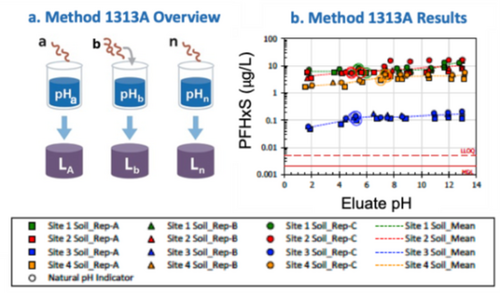
Figure 1: Figure 1. a) Overview of LEAF Method 1313A and b) PFHxS leaching as a function of pH
[1]. Definitions: lower limit of quantification (LLOQ) and method detection limit (MDL)
Draft Method 1313A was used to evaluate pH-dependent leaching in PFAS-contaminated soils in parallel batch extractions where each set of batch reactors is prepared and equilibrated at different pH (Figure 1). Short-chain PFAS (≤6 fluorinated carbons) generally showed little to no variation in leaching across the tested pH range of 2-13 (e.g., PFHxS, Figure 1), whereas long-chain PFAS exhibited increased leaching at higher pH[1]. This trend is consistent with previous findings showing that soil-water partitioning coefficients (Kd) decrease as pH increases (e.g., Higgins and Luthy 2006)[5]. The most pronounced pH effects were observed for perfluoroalkyl sulfonamides (FASAs) such as perfluorooctane sulfonamide (FOSA), which transition from neutral to anionic forms within the circumneutral pH range (~pH 6). The anionic form has a lower Kd and results in higher leaching concentrations[1][6]. For many site management scenarios where pH is circumneutral, variations in anionic PFAS leaching are expected to be small over the relevant pH range. In such cases, when testing time and costs are primary considerations, Method 1313A may be a lower priority relative to evaluating leaching as a function of L/S (Method 1316A, Method 1314A). Different considerations may be needed where FASAs or PFAS with multiple, ionizable functional groups (i.e., zwitterions) are of concern.
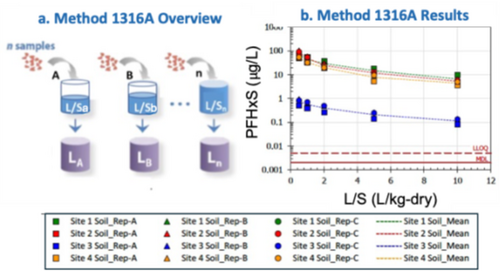
Figure 2: a) Overview of LEAF Method 1316A and b) PFHxS leaching as a function of L/S ratio evaluated in parallel batch leaching vessels
[1]Draft Method 1316A was used to evaluate L/S-dependent leaching of PFAS in impacted soils using parallel batch extractions where each set of batch reactors is prepared and equilibrated at a different L/S. (Figure 2). Methods 1314A and 1316A are similar in intent as they both evaluate leaching as a function of L/S; however, the experimental approach differs. Method 1314A uses a flow-through column configuration (Figure 3; discussed further below). Method 1314A may better simulate field conditions, but Method 1316A is simpler and less costly to implement. Trends in Method 1314A and 1316A are expected to be qualitatively similar but leaching concentrations are expected to exhibit differences. Despite this, leaching studies comparing Methods 1314A and 1316A for inorganics showed that cumulative release results were within one order of magnitude[7].
Method 1316A and Method 1314A may also provide different insights into transport mechanisms. Because Method 1316A is performed using equilibrated batch reactors at varying L/S, results can be used to develop equilibrium desorption isotherms and calculate desorption coefficients (e.g., Kd,desorption). Studies have shown that Kd,desorption values for PFAS may be greater than Kd, an effect often attributed to desorption hysteresis[8]. Consequently Method 1316A provides a straightforward method to estimate site-specific desorption parameters. Although sorption parameters can also be inferred from column (Method 1314A) data, interpretation is often complicated by nonequilibrium processes. Conversely, the column data can be valuable for quantifying those additional mechanisms providing transport parameters that can describe rate-limited transport (e.g., fraction of non-equilibrium sorption sites and sorption rates) and other dynamic behavior.
As anticipated, trends in PFAS leaching obtained during the Method 1316A and Method 1314A demonstrations were qualitatively similar. These are further discussed below.
Column Test Demonstration Studies
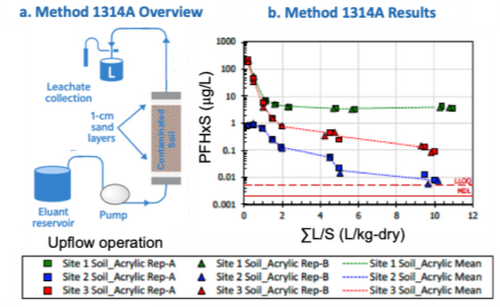
Figure 3. a) Overview of LEAF Method 1314A and b) PFHxS leaching as a function of ∑(L/S) evaluated in saturated up-flow column tests
[1]. Note that acrylic here simply refers to the column material of construction used in this round of Method 1314 testing.
PFAS-specific adaptations were tested in column test demonstration studies, which included triplicate implementation of Method 1314A in three AFFF-impacted site soils.
Draft Method 1314A was implemented in saturated, up-flow columns to evaluate leaching of PFAS as a function of cumulative L/S (∑(L/S)); Figure 3; total volume of water that has passed through the column divided by the soil mass in the column). As noted, the intent of Method 1314a and 1316a is similar, and in both tests, similar qualitative results were observed. For example, short-chain PFAS exhibited high initial concentrations that decreased rapidly. However, in Method 1314a, these rapid drops in short-chain PFAS tended to occur by ∑(L/S) ≈ 2 (e.g., Site 1 and 3 soils, Figure 3) whereas in some cases, such as for PFHxS, Method 1316A produced slightly flatter elution curves than Method 1314A (Figures 2b and 3b). Long-chain PFAS generally displayed flatter elution profiles than short-chain PFAS across both methods. These trends are consistent with chain length dependent sorption documented in the literature[5][6][9]. Although column modeling is beyond the scope of this article, prior studies have shown that saturated transport can be influenced by rate-limited desorption, particularly for long-chain PFAS[10][11]. As noted, data from Methods 1316A and 1314A can support estimation of transport parameters representing equilibrium and nonequilibrium behavior, respectively.
LEAF Screening Evaluations
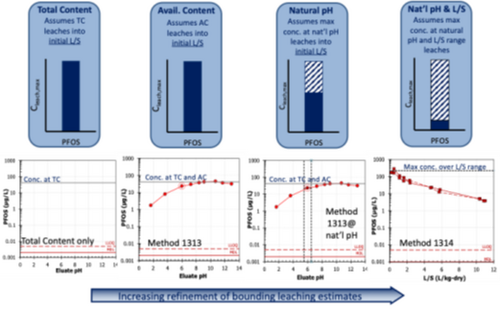
Figure 4. Example screening assessment for perfluorooctane sulfonate (PFOS) using total content and data from Methods 1313A and 1314A. Figure format adapted from Garrabrants
et al. 2021
[12].
LEAF provides a standardized, robust approach for evaluating PFAS release from impacted granular materials under a range of environmental conditions. The tests are complementary, capture a range of conditions, and vary in ease of implementation. This provides the flexibility for users to select the test or test combinations that best suit their project objectives, timeline, and budget. A common use of LEAF data is in screening level assessments. These are stepwise assessments that establish increasingly refined maximum leaching concentrations, Cleach,max (Figure 4), which can then be compared to regulatory limits such as maximum contaminant levels, when available. For example, a stepwise screening assessment might include:
- Assume the maximum leaching concentration is represented by the total content (total initial mass of contaminant present) leaching into the first L/S.
- Assume only the available content leaches into the first L/S where available content is the maximum mass released over pH 2-13 measured using Method 1313a. For many PFAS, total content is equal to available content meaning that all of the PFAS mass is available for leaching.
- Assume the leaching concentration at natural pH (measured in Method 1313A at natural pH or Method 1316A at L/S of 10) is maximum leaching concentration adjusted to the first L/S.
- Consider the maximum leaching concentration over the L/S range (Method 1314A or Method 1316A) and the upper estimate of leaching, or Cleach,max, is the concentration from either Step 3 or Step 4, whichever is greater.
Screening assessments may be sufficient to meet project goals, but when additional refinements of leaching estimates are needed, site-specific data (e.g., infiltration) can be combined with test data and computational approaches (e.g., fate and transport models) for more site-specific estimates of leaching. Example scenarios where LEAF may be used to evaluate PFAS-impacted solids include 1) estimating PFAS release from AFFF-impacted soils, 2) estimating PFAS release from biosolids-amended soils at land application sites, 3) providing transport parameters to model PFAS transport from the source zone to the saturated zone, and 4) evaluating PFAS release from treatment residuals such as soils or sediments treated by soil washing or thermal approaches.
Summary and Ongoing Research
The LEAF framework offers a reliable, replicable approach to evaluating PFAS release from solids. With recent adaptations for PFAS-specific considerations, LEAF methods provide valuable tools for regulators and practitioners in managing PFAS-contaminated materials and assessing long-term environmental risks. However, there are key areas of ongoing research, including:
- An interlab validation of Methods 1313A, 1314A, and 1316A in coordination with the EPA
- Optimization and demonstration of Method 1315A for use with PFAS-impacted solids
- Evaluation of an unsaturated Method 1314A protocol to assess the need for and ability of LEAF testing to capture air-water interfacial partitioning of PFAS
- Application of the total oxidizable precursor (TOP) assay for evaluating the maximum additional PFAS leaching that may occur as a result of polyfluoroalkyl precursor transformation
- Comparison of LEAF testing data to previously collected field-scale enhanced flushing data collected from the same site
Additionally, there are key areas for consideration in future research:
- Collection of paired field-laboratory data under ambient conditions to further validate the applicability of LEAF assessments for estimation of field-relevant PFAS leaching and mobility
- Consideration of biotransformation in modeling and interpretation of LEAF data, as the state of the science regarding biotransformation of polyfluoroalkyl substances to terminal perfluoroalkyl acids advances
Other LEAF Resources
There are numerous resources describing the development of the LEAF leaching methods for inorganics. They are not specific to PFAS, but are still valuable resources focused on LEAF implementation, applications, and management of LEAF data. They include:
References
- ^ 1.0 1.1 1.2 1.3 1.4 1.5 1.6 1.7 Garrabrants, A.C., Liu, F., Warne, R., DeLapp, R., Brown, L., Rubin, Z., Yawson, D., Kosson, D.S., Guelfo, J.L., Real, M.I., van der Sloot, H.A., Touati, A., Thorneloe, S., 2024. Development of Leaching Tests for Materials Containing SVOCs and PFAS, EPA 600/R-23/382, USEPA, Washington, D.C. Free Download EPA 600/R-23/382
- ^ Garrabrants, A.C., Kosson, D.S., Stefanski, L., DeLapp, R., Seignette, P.F.A.B., van der Sloot, H.A., Kariher, P., Baldwin, M., 2012. Interlaboratory Validation of the Leaching Environmental Assessment Framework (LEAF) Method 1313 and Method 1316, EPA/600/R-12/623, U.S. Environmental Protection Agency, Air Pollution and Control Division. Free Download EPA 600/R-12/623
- ^ Garrabrants, A.C., Kosson, D.S., DeLapp, R., Kariher, P., Seignette, P.F.A.B., van der Sloot, H.A., Stefanski, L., Baldwin, M., 2012. Interlaboratory Validation of the Leaching Environmental Assessment Framework (LEAF) Method 1314 and Method 1315, EPA/600/R-12/624, U.S. Environmental Protection Agency, Air Pollution and Control Division. Free Download EPA 600/R-12/624
- ^ USEPA, 2026. Hazardous Waste Test Methods / SW-846. USEPA SW-846 website
- ^ 5.0 5.1 Higgins, C.P., Luthy, R.G., 2006. Sorption of Perfluorinated Surfactants on Sediments. Environmental Science and Technology, 40(23), pp. 7251–7256. doi: 10.1021/es061000n
- ^ 6.0 6.1 Nguyen, T.M.H., Bräunig, J., Thompson, K., Thompson, J., Kabiri, S., Navarro, D.A., Kookana, R.S., Grimison, C., Barnes, C.M., Higgins, C.P., McLaughlin, M.J., Mueller, J.F., 2020. Influences of Chemical Properties, Soil Properties, and Solution pH on Soil–Water Partitioning Coefficients of Per- and Polyfluoroalkyl Substances (PFASs). Environmental Science and Technology, 54(24), pp. 15883–15892. doi: 10.1021/acs.est.0c05705 Open Access Article
- ^ Lopez Meza, S., Garrabrants, A.C., van der Sloot, H., Kosson, D.S., 2008. Comparison of the Release of Constituents from Granular Materials under Batch and Column Testing. Waste Management, 28(10), pp. 1853–1867. doi: 10.1016/j.wasman.2007.11.009
- ^ Schaefer, C.E., Nguyen, D., Christie, E., Shea, S., Higgins, C.P., Field, J., 2022. Desorption Isotherms for Poly- and Perfluoroalkyl Substances in Soil Collected from an Aqueous Film-Forming Foam Source Area. Journal of Environmental Engineering, 148(1), Article 04021074. doi: 10.1061/(ASCE)EE.1943-7870.0001952
- ^ Guelfo, J.L., Higgins, C.P., 2013. Subsurface Transport Potential of Perfluoroalkyl Acids at Aqueous Film-Forming Foam (AFFF)-Impacted Sites. Environmental Science and Technology, 47(9), pp. 4164–4171. doi: 10.1021/es3048043
- ^ Doria-Manzur, A., Gray, E.P., Streets, S.S., Guelfo, J.L., 2025. Per- and Polyfluoroalkyl Substances (PFAS) Transport from Biosolids-Amended Soils: An Experimental and Numerical Approach. Water Research, 288(Part B), Article 124674. doi: 10.1016/j.watres.2025.124674 Open Access Article
- ^ Guelfo, J.L., Wunsch, A., McCray, J., Stults, J.F., Higgins, C.P., 2020. Subsurface Transport Potential of Perfluoroalkyl Acids (PFAAs): Column Experiments and Modeling. Journal of Contaminant Hydrology, 233, Article 103661. doi: 10.1016/j.jconhyd.2020.103661 Open Access Manuscript
- ^ Garrabrants, A.C., Kosson, D.S., Brown, K.G., Fagnant, D.P., Helms, G., Thorneloe, S.A., 2021. Methodology for Scenario-Based Assessments and Demonstration of Treatment Effectiveness Using the Leaching Environmental Assessment Framework (LEAF). Journal of Hazardous Materials, 406, Article 124635. doi: 10.1016/j.jhazmat.2020.124635 Open Access Manuscript
See Also


