Difference between revisions of "Main Page"
| (11 intermediate revisions by 2 users not shown) | |||
| Line 3: | Line 3: | ||
|- | |- | ||
| style="width:55%;" |<center><span style="font-size:175%; line-height: 0.2em; vertical-align:top;"><big><span style="color:#008566">Welcome to '''ENVIRO'''</span> <span style="color:#762a87">'''Wiki'''</span></big></span><br /><br /><br /><span style="font-size:150%; color:#008566; line-height: 0.2em; vertical-align:top;"> Peer Reviewed. Accessible. Written By Experts</span></center> | | style="width:55%;" |<center><span style="font-size:175%; line-height: 0.2em; vertical-align:top;"><big><span style="color:#008566">Welcome to '''ENVIRO'''</span> <span style="color:#762a87">'''Wiki'''</span></big></span><br /><br /><br /><span style="font-size:150%; color:#008566; line-height: 0.2em; vertical-align:top;"> Peer Reviewed. Accessible. Written By Experts</span></center> | ||
| − | + | ||
| − | |||
|- | |- | ||
|<span style="width:55%; line-height: 0.3em;"> The goal of ENVIRO Wiki is to make scientific and engineering research results more accessible to environmental professionals, facilitating the permitting, design and implementation of environmental projects. Articles are written and edited by invited experts (see [[Contributors]]) to summarize current knowledge for the target audience on an array of topics, with cross-linked references to reports and technical literature. </span> | |<span style="width:55%; line-height: 0.3em;"> The goal of ENVIRO Wiki is to make scientific and engineering research results more accessible to environmental professionals, facilitating the permitting, design and implementation of environmental projects. Articles are written and edited by invited experts (see [[Contributors]]) to summarize current knowledge for the target audience on an array of topics, with cross-linked references to reports and technical literature. </span> | ||
| Line 18: | Line 17: | ||
<!-- TODAY'S FEATURED ARTICLE --> | <!-- TODAY'S FEATURED ARTICLE --> | ||
| id="mp-left" class="MainPageBG" style="width:55%; padding:0; vertical-align:top; color:#000;" | | | id="mp-left" class="MainPageBG" style="width:55%; padding:0; vertical-align:top; color:#000;" | | ||
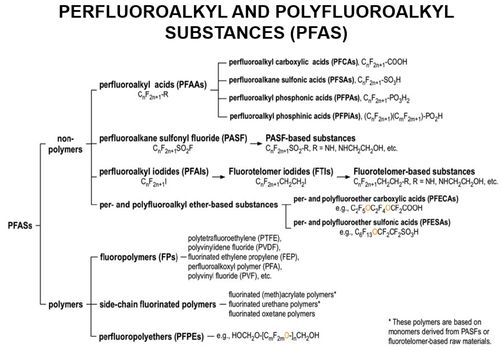
| − | <h2 id="mp-tfa-h2" style="margin:0.5em; background:#cef2e0; font-family:inherit; font-size:120%; font-weight:bold; border:1px solid #a3bfb1; color:#000; padding:0.2em 0.4em;"> Featured article: PFAS | + | <h2 id="mp-tfa-h2" style="margin:0.5em; background:#cef2e0; font-family:inherit; font-size:120%; font-weight:bold; border:1px solid #a3bfb1; color:#000; padding:0.2em 0.4em;"> Featured article: PFAS Destruction by Ultraviolet/Sulfite Treatment</h2> |
| − | <div id="mp-tfa" style="padding:0.0em 1.0em;">[[File: | + | <div id="mp-tfa" style="padding:0.0em 1.0em;">[[File:XiongFig1.png|400px|left|link=PFAS Destruction by Ultraviolet/Sulfite Treatment]]<dailyfeaturedpage></dailyfeaturedpage> |
| − | [[PFAS | + | [[PFAS Destruction by Ultraviolet/Sulfite Treatment|(Full article...)]] </div> |
| style="border:1px solid transparent;" | | | style="border:1px solid transparent;" | | ||
| Line 104: | Line 103: | ||
*[[Natural Attenuation in Source Zone and Groundwater Plume - Bemidji Crude Oil Spill |Natural Attenuation in Source Zone and Groundwater Plume -<br />Bemidji Crude Oil Spill]] | *[[Natural Attenuation in Source Zone and Groundwater Plume - Bemidji Crude Oil Spill |Natural Attenuation in Source Zone and Groundwater Plume -<br />Bemidji Crude Oil Spill]] | ||
*[[OPTically-based In-situ Characterization System (OPTICS)]] | *[[OPTically-based In-situ Characterization System (OPTICS)]] | ||
| − | |||
| − | |||
| − | |||
| − | |||
| − | |||
| − | |||
| − | |||
| − | |||
<u>'''[[Coastal and Estuarine Ecology]]'''</u> | <u>'''[[Coastal and Estuarine Ecology]]'''</u> | ||
| Line 117: | Line 108: | ||
*[[Phytoplankton (Algae) Blooms]] | *[[Phytoplankton (Algae) Blooms]] | ||
| − | |||
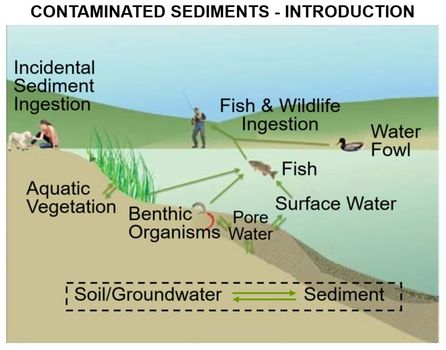
<u>'''[[Contaminated Sediments - Introduction | Contaminated Sediments]]'''</u> | <u>'''[[Contaminated Sediments - Introduction | Contaminated Sediments]]'''</u> | ||
*[[Contaminated Sediment Risk Assessment]] | *[[Contaminated Sediment Risk Assessment]] | ||
| + | *[[In Situ Toxicity Identification Evaluation (iTIE) | In Situ Toxicity Identification Evaluation]] | ||
*[[In Situ Treatment of Contaminated Sediments with Activated Carbon]] | *[[In Situ Treatment of Contaminated Sediments with Activated Carbon]] | ||
*[[Mercury in Sediments]] | *[[Mercury in Sediments]] | ||
*[[Passive Sampling of Sediments]] | *[[Passive Sampling of Sediments]] | ||
| + | **[[Sediment Porewater Dialysis Passive Samplers for Inorganics (Peepers)]] | ||
*[[Sediment Capping]] | *[[Sediment Capping]] | ||
| − | + | ||
| + | | style="width:33%; vertical-align:top; " | | ||
<u>'''[[Light Non-Aqueous Phase Liquids (LNAPLs)]]'''</u> | <u>'''[[Light Non-Aqueous Phase Liquids (LNAPLs)]]'''</u> | ||
| Line 155: | Line 148: | ||
*[[Monitored Natural Attenuation (MNA) of Chlorinated Solvents| MNA of Chlorinated Solvents]] | *[[Monitored Natural Attenuation (MNA) of Chlorinated Solvents| MNA of Chlorinated Solvents]] | ||
| + | **[[Estimating PCE/TCE Abiotic First-Order Reductive Dechlorination Rate Constants in Clayey Soils Under Anoxic Conditions]] | ||
*[[Monitored Natural Attenuation (MNA) of Fuels| MNA of Fuels]] | *[[Monitored Natural Attenuation (MNA) of Fuels| MNA of Fuels]] | ||
*[[Monitored Natural Attenuation (MNA) of Metal and Metalloids| MNA of Metals and Metalloids]] | *[[Monitored Natural Attenuation (MNA) of Metal and Metalloids| MNA of Metals and Metalloids]] | ||
| Line 163: | Line 157: | ||
*[[Hydrothermal Alkaline Treatment (HALT)]] | *[[Hydrothermal Alkaline Treatment (HALT)]] | ||
| + | *[[Lysimeters for Measuring PFAS Concentrations in the Vadose Zone]] | ||
| + | *[[PFAS Destruction by Ultraviolet/Sulfite Treatment]] | ||
*[[PFAS Ex Situ Water Treatment]] | *[[PFAS Ex Situ Water Treatment]] | ||
**[[PFAS Treatment by Anion Exchange]] | **[[PFAS Treatment by Anion Exchange]] | ||
| + | *[[PFAS Leaching Characterization with the Leaching Environmental Assessment Framework (LEAF)]] | ||
*[[PFAS Monitored Retention (PMR) and PFAS Enhanced Retention (PER)]] | *[[PFAS Monitored Retention (PMR) and PFAS Enhanced Retention (PER)]] | ||
*[[PFAS Soil Remediation Technologies]] | *[[PFAS Soil Remediation Technologies]] | ||
Latest revision as of 10:55, 17 August 2026
Peer Reviewed. Accessible. Written By Experts | |
| The goal of ENVIRO Wiki is to make scientific and engineering research results more accessible to environmental professionals, facilitating the permitting, design and implementation of environmental projects. Articles are written and edited by invited experts (see Contributors) to summarize current knowledge for the target audience on an array of topics, with cross-linked references to reports and technical literature. | See Table of Contents |
Featured article: PFAS Destruction by Ultraviolet/Sulfite Treatment |
Enviro Wiki Highlights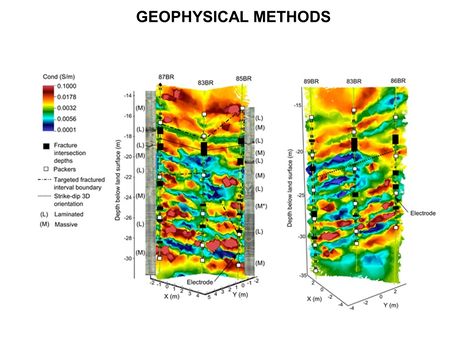 High-resolution 3D cross-borehole electrical imaging of contaminated fractured rock at the former Naval Air Warfare Center in New Jersey. Cross-borehole resistivity tomography imaging is a geophysical technique that can be used for site characterization and monitoring by observing variations in the electrical properties of subsurface materials |